info@wolsports.com
0086 132 8323 3443
Factory price pilates equipments

info@wolsports.com
0086 132 8323 3443
Factory price pilates equipments
A studio owner in Rotterdam emailed me last Tuesday with a photo of a carriage wheel and one question. Was this normal wear, or had she bought the wrong machine? The wheel had a flat spot. Her studio runs fourteen classes a day. The reformer was nineteen months old.
I have been selling pilates equipment out of a factory for years, and that email is the one I get most often. It is almost never “which reformer should I buy”. It is always “something on my reformer is making a noise”.
So here is what actually wears, how to catch it early, and what to check before you place a wholesale order so you are not replacing parts you should never have had to replace.
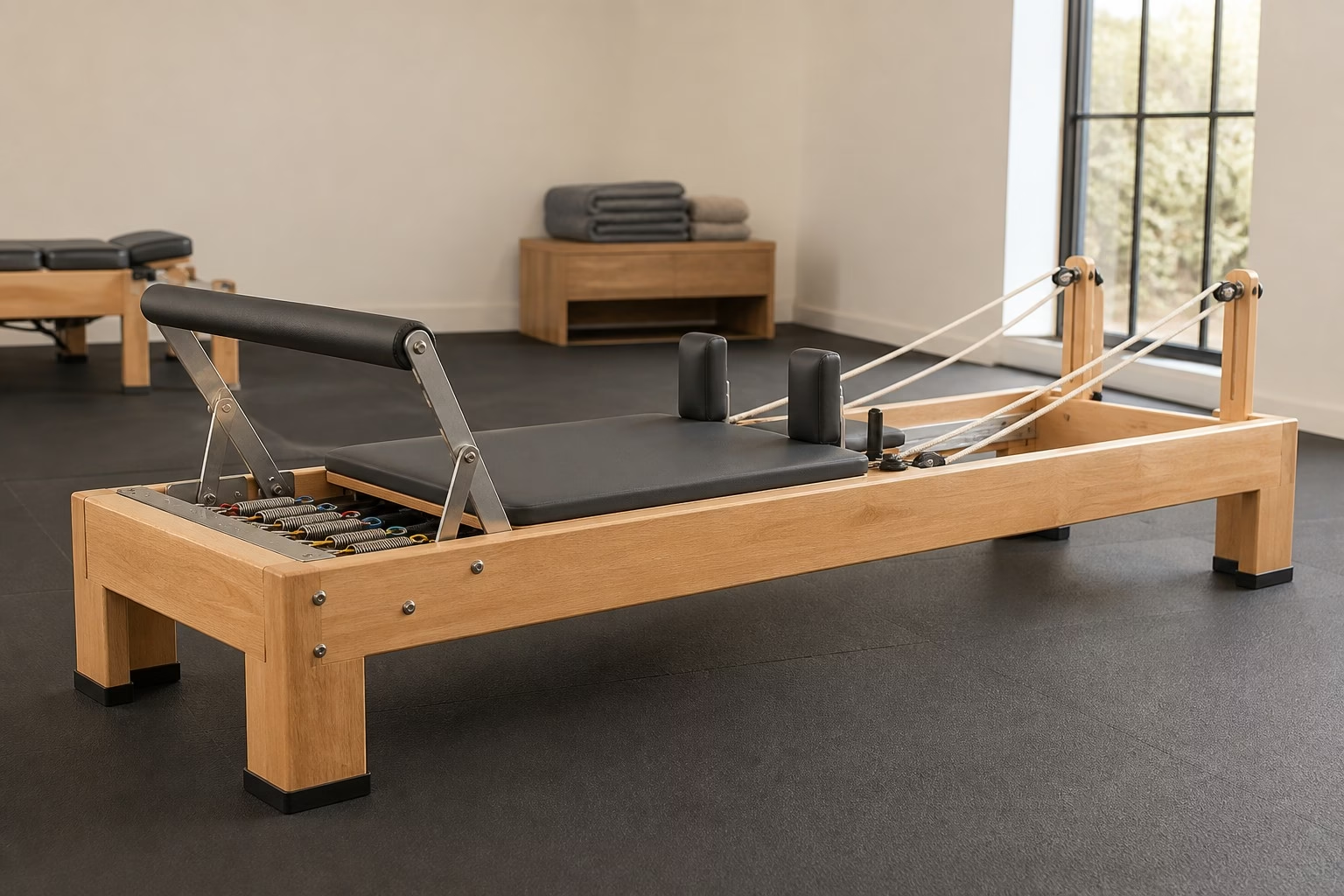
A reformer is a simple machine. Frame, carriage, rails, springs, ropes, footbar, shoulder rests. That is the whole list.
Nothing on it is exotic. But a studio with ten machines and a flat spot on every wheel is looking at a repair bill that a small maintenance habit would have avoided.
Failures are predictable. They come in this order.
Wheels take the load. Every repetition, every body, every day.
What kills them is not weight. It is grit on the rail and an uneven floor. Dust embeds in the wheel, the wheel stops rolling cleanly, and the carriage starts to drag to one side.
Lift the carriage and spin each wheel by hand. It should turn free and quiet. A wheel that clicks, wobbles, or shows a flat spot is finished. Wheels are cheap. Rails are not.
Two signs you waited too long: black rubber dust along the rail, and a scuff line on the aluminium.
Springs lose tension long before they snap. That is the dangerous version, because nothing looks broken.
If your advanced clients start complaining that level four feels soft, the springs are tired. If a spring hangs with a gap between coils when the carriage is at rest, it is past saving.
Replace springs as a set, not one at a time. A mixed set pulls the carriage crooked, and then you blame the wheels.
There is a full breakdown of spring colours, resistance and counting in our pilates reformer springs guide.
Look at where the rope bends over the pulley. That is where it frays.
Run your thumb along the rope under the pulley. Any rough patch, any flattened section, any place where the outer braid has gone shiny, and you are one hard pull from a snap.
Padded handles split at the stitching first. Straps go at the buckle holes. Both are simple to replace and both get ignored until a client notices.
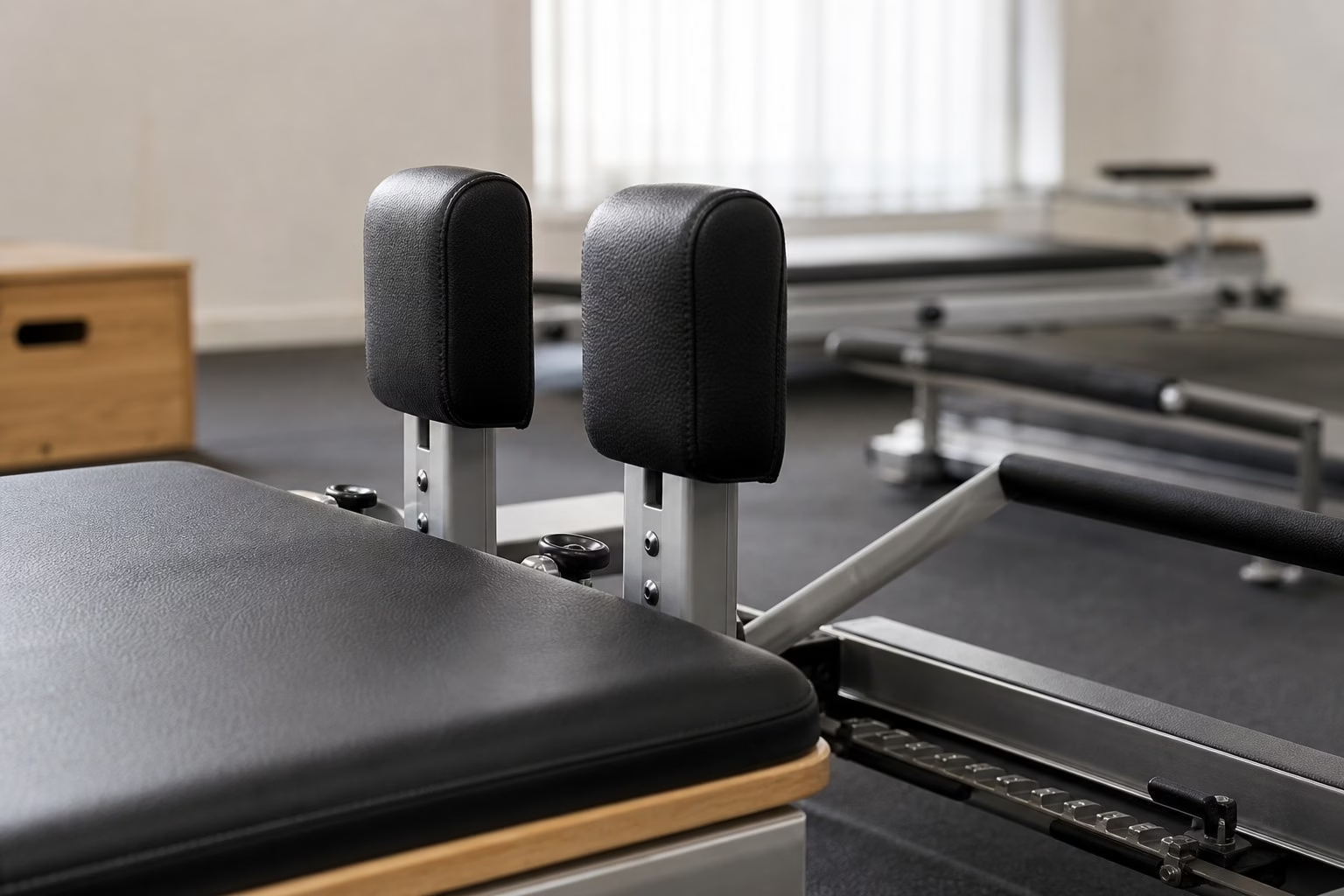
Shoulder rests are foam under vinyl. They compress, then they crack at the corners, then clients start shifting around mid-exercise.
Risers hold the pulleys. The problem there is not wear, it is looseness. A riser that has worked half a turn loose will make the rope sit off-centre, and an off-centre rope wears the pulley edge.
The footbar hinge is the one joint on a reformer that gets used a hundred times a day. Check it for lateral play. A wobbly footbar is a safety issue, not an annoyance.
Vinyl fails from sweat and cleaning chemicals, not from age. The stitching goes first, usually at the front edge of the carriage where hands grip.
Replacement upholstery is the difference between a machine that looks five years old and one that looks fifteen. It is also the cheapest way to make a studio feel new.
Manuals get lost. Diagrams are easier to rebuild from memory than you think.
Split the machine into four zones and the part list writes itself.
Foot end. Spring bar, springs, spring hooks, footbar, gear bar or gear block, footbar hinge, frame end cap.
Middle. Rails, rail inserts, carriage, carriage wheels, wheel axles, carriage stopper, head pad, shoulder rests.
Head end. Risers, riser pins, pulleys, rope, rope clamps, handles or straps.
Frame. Legs, leg bolts, floor feet, non-slip pads, and the standing platform if your model has one.
When you order replacements, name the zone and the part. “Spare parts for a reformer” gets you a guess. “Carriage wheel, 60 mm, sealed bearing, 8 mm axle” gets you the right box.
Measure before you email. Wheel diameter, rope length, spring length and spring wire gauge are the four numbers that decide whether the part fits.
| Part | Typical life in a busy studio | What to watch |
|---|---|---|
| Springs | 1–2 years | Softness at high resistance, gaps between coils |
| Ropes | 1–2 years | Fraying at the pulley, shiny patches |
| Handles and straps | 1–2 years | Split stitching, stretched buckle holes |
| Carriage wheels | 2–4 years | Flat spots, rubber dust on the rail |
| Upholstery | 3–6 years | Cracking at the edges, open stitching |
| Shoulder rests | 3–6 years | Compressed foam, hard corners |
Those numbers assume heavy commercial use. A home reformer sees a fraction of those hours and lasts several times as long.
This is the part that saves the most money, and almost nobody asks it at the quoting stage.
Are the wear parts standard sizes? If the factory uses a proprietary wheel or a custom spring length, you are locked to that factory for the life of the machine. Standard parts you can source anywhere.
Will you still stock this part in five years? Ask it plainly. A factory that builds for export has an answer ready. A trading company reselling someone else’s machine does not.
What is the part warranty, separately from the machine warranty? Frame warranties of five or ten years are common. Springs are not covered for a decade, and nobody should tell you they are.
What is the minimum order on spare parts? Some suppliers will not ship fewer than fifty wheels. If you run one studio, that is fifty wheels you will never use. Find out before you sign.
Can you send the parts list as a document? A manufacturer with a real parts catalogue will email it. That document is worth more than a discount.
The same questions apply whether you are buying commercial pilates reformers for a studio floor or specifying an OEM private label run for your own brand.
Wood and aluminium machines wear differently, and they do not share parts.
Aluminium frames are lighter and hold their alignment better on an uneven floor, which is easier on wheels. Wood frames flex slightly, which is comfortable to train on and slightly harder on the carriage stopper over time.
If your floor is not level, fix the floor before you blame the equipment. A reformer that walks across the room during a class is telling you about the slab, not the machine.
For models with a tower or half tower, the tower springs and the riser pins are their own wear list. Anything with a movable footbar, like the maple wood movable footbar reformer, adds a hinge and a locking pin to check every month.
Studio builds that mix tower and non-tower machines, such as our reformers with tower range, need two separate spare part lists. Do not assume one list covers both.
How often should I service a reformer? A busy studio: monthly visual check, quarterly deeper check on springs, ropes and wheels. A home machine: once a year is plenty.
Can I replace a spring with a different brand? Only if length, wire gauge and hook type match. Mixing within one machine is the mistake, not mixing brands.
My carriage squeaks. Is that serious? Usually it is a dry wheel or a rope rubbing a riser. Clean the rail, check the riser bolts, and it goes away. If it does not, look at the wheels.
Should I stock spare parts as a studio? Yes. One set of springs, one pair of ropes and one set of wheels on the shelf covers a year of surprises and costs less than one lost class day.
Need parts, or a machine that will not need them for years?
Send us your model, the parts list you need, or the studio you are equipping. We will reply with specifications, pricing and lead time.

