info@wolsports.com
0086 132 8323 3443
Factory price pilates equipments

info@wolsports.com
0086 132 8323 3443
Factory price pilates equipments
Three years ago, a studio owner in Melbourne wrote to me with a question I still hear every week: “I want to sell reformers under my own brand. Where do I even start?”
She had the clients, the space, and a name she loved. What she did not have was a factory. We walked her through the OEM process step by step, and today her brand sits in eleven studios. This guide covers the same path, so you know what to ask, what to expect, and what to avoid before you sign anything.
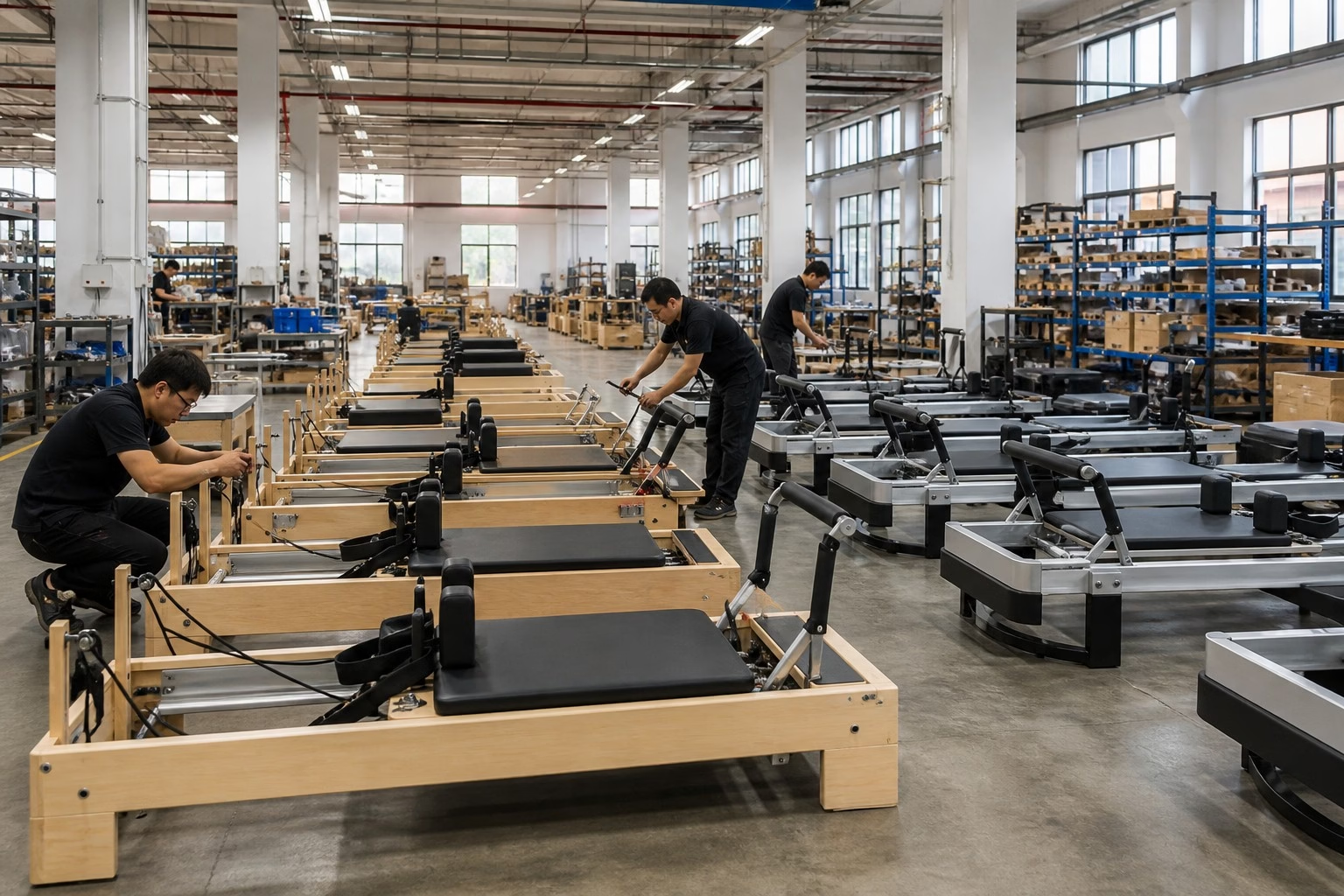
Three terms get mixed up in most conversations, and the difference changes your contract.
OEM (Original Equipment Manufacturing) means the product is built to your specifications. You define the frame, the dimensions, the springs, the upholstery. The factory provides the production line and the know-how.
ODM (Original Design Manufacturing) means you start from a factory design and adjust details. Most pilates equipment factories, including ours, work this way for the majority of private label orders.
Private label is the branding layer on top: your logo plate, your packaging, your product name, your warranty. The machine can be a proven factory design, and you make it yours in the eyes of your customers.
Three reasons come up in almost every conversation with studio owners and equipment distributors.
First, margin. Retail pricing on commercial reformers carries a large markup, and factory-direct wholesale pricing is what makes a resale business work in the first place.
Second, control. You choose the materials and the build quality instead of accepting what a trading company happens to stock.
Third, differentiation. A private label range lets you build a brand that competitors who resell the same generic units simply do not have.
Factories answer faster when you bring a clear brief. Before your first message, write down:
If you are unsure about wood versus aluminum, our earlier comparison walks through the trade-offs in detail. And if you want a compact option for home clients, our foldable aluminum reformer is a common starting point for private label programs.
A typical OEM order follows the same six steps, whether you order five units or five hundred.
Not every customization is worth paying for. The ones that matter most to end customers:
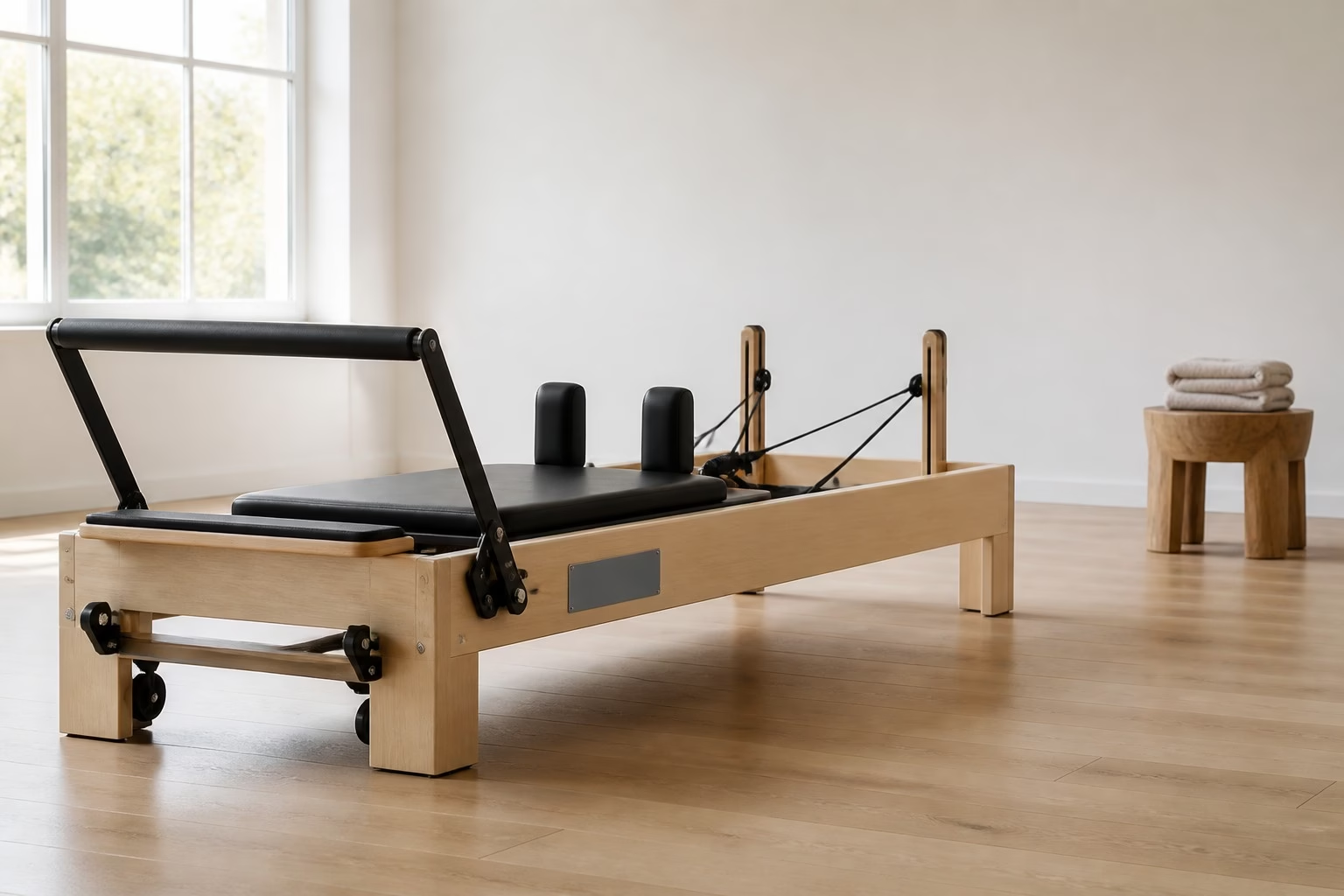
Be realistic about minimum order quantities. A typical MOQ is 5-10 units per model for a factory-direct private label program, and it is usually negotiable when you combine models into one order. Samples cost extra but are almost always credited back when the full order follows. Ask for the credit policy in writing.
Before you approve a shipment, confirm what the factory checks: frame welds and joints, spring tension consistency, bearings and carriage glide, upholstery seams, and footbar locking. Ask for inspection photos and, where relevant, certification documents. A serious factory has no problem sharing both.
Can I order with my own logo on the frame? Yes. A logo plate is standard private label work, and we also offer custom upholstery and packaging.
What is the minimum order for private label? For our factory it is typically 5-10 units per model, depending on the customization level.
How long does a sample take? Usually 7-15 days from spec approval, plus shipping time.
Do you ship worldwide? Yes. We ship to studios and distributors in North America, Europe, Australia, and the Middle East.
Can I mix models in one order? Yes. Mixing models is the easiest way to reach a more favorable MOQ and freight cost per unit.
Starting a pilates brand is not about finding a cheaper supplier. It is about finding a factory that treats your name as seriously as you do. Send us your brief, and we will tell you honestly what is realistic for your budget and timeline.
Ready to launch your own pilates equipment brand?
Talk to our factory team about OEM, private label, and wholesale pricing.

