info@wolsports.com
0086 132 8323 3443
Factory price pilates equipments

info@wolsports.com
0086 132 8323 3443
Factory price pilates equipments
Two years ago, a studio owner in Munich wrote to me with a question I still hear every week: “Do I really need the tower, or am I just paying for extra metal?”
She ran a small private studio. Eight reformers, one spare room. Most of her clients were over fifty, recovering from surgeries or just trying to move better. I told her what I will tell you: the tower is not a decoration you buy for looks. It is a different tool, and for some studios it pays for itself in the first year. She ordered a tower reformer, and six months later she told me it had become the most booked machine in the room.
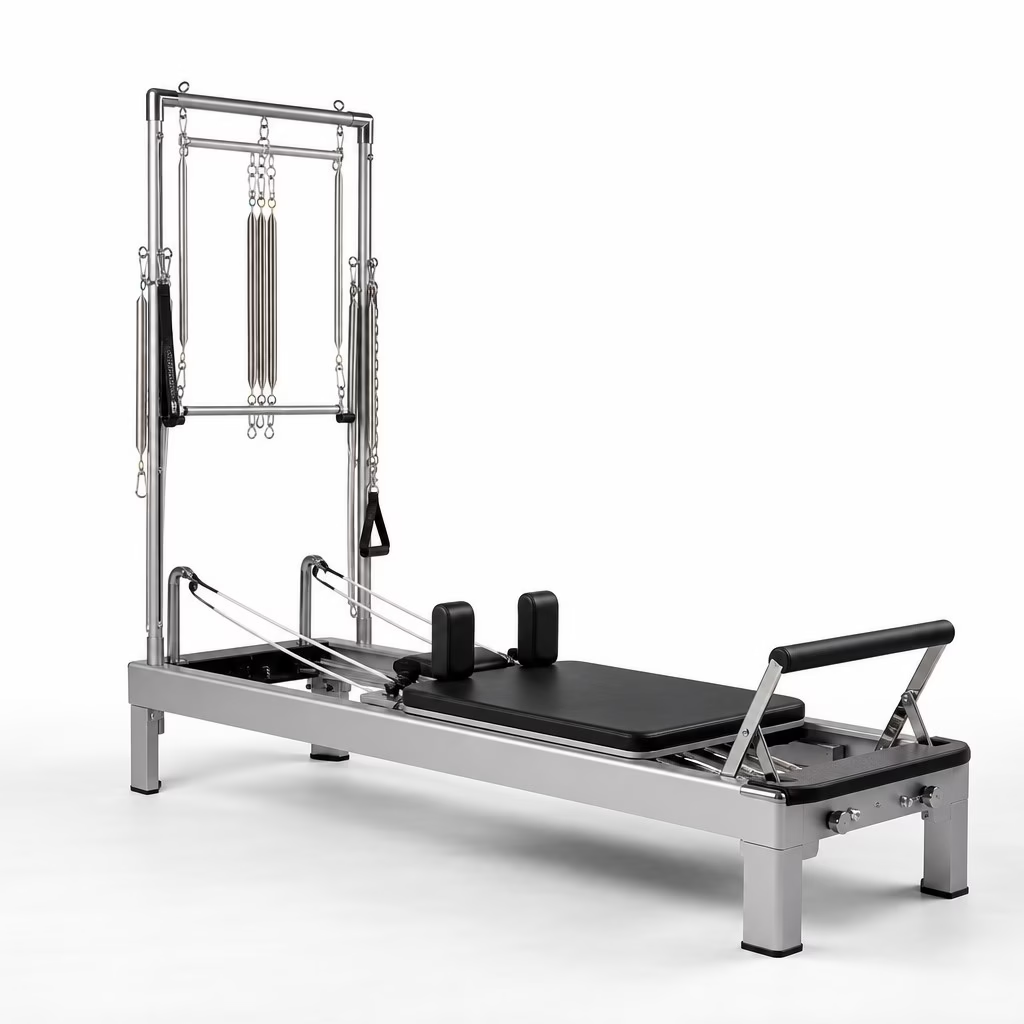
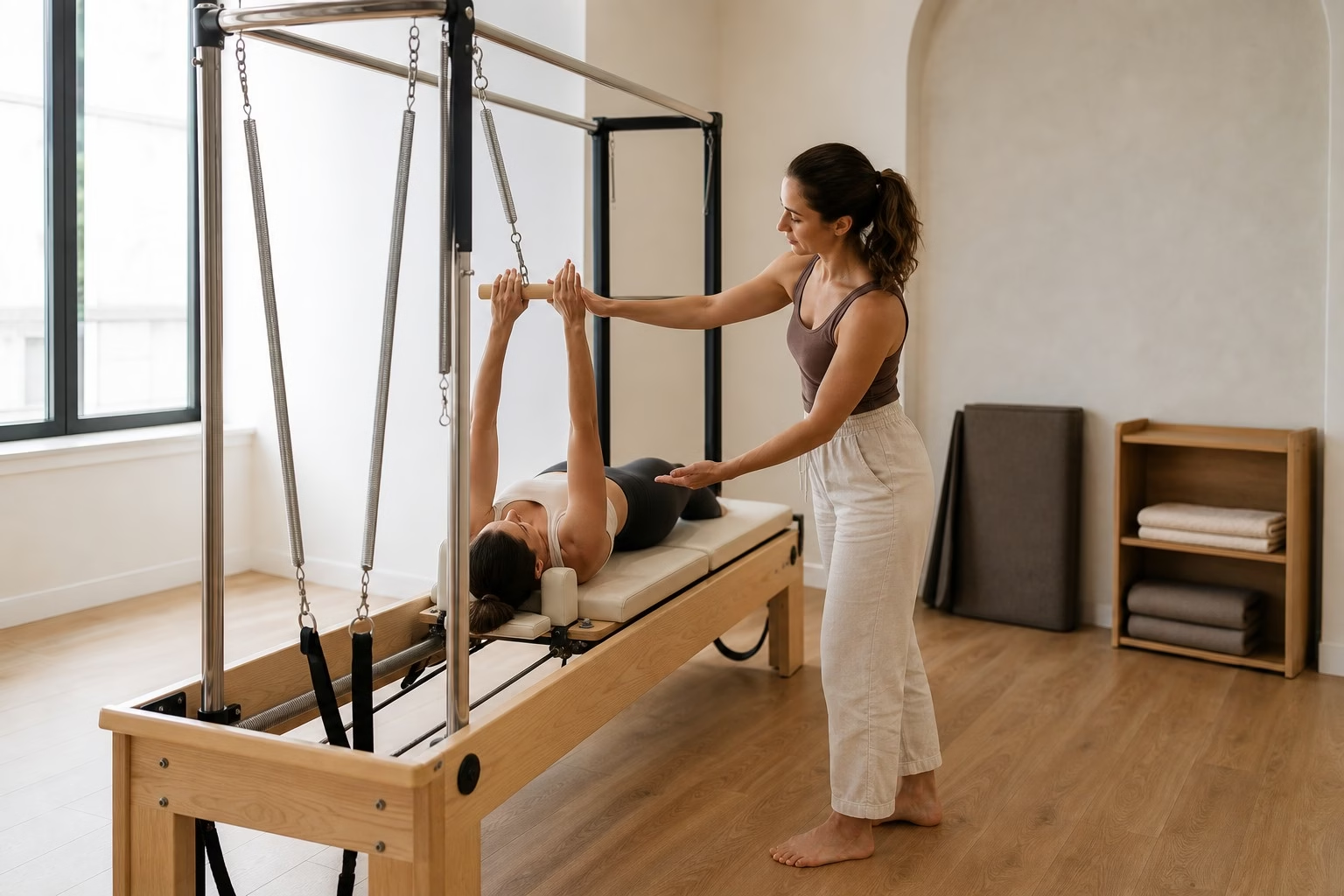
A reformer with tower mounts a spring system on a vertical frame above the carriage. Instead of pushing against springs with your feet, you push, pull, and hang against them with your arms and your whole body weight. That opens up a range of exercises a flat reformer simply cannot do.
Think of it this way. A standard reformer trains the body in horizontal planes. A tower trains it in vertical and hanging positions. Rehab work, shoulder work, and full-body stretching all move better when gravity does part of the job. Clients who struggle on a mat or a standard reformer often find tower work approachable, because the springs support part of their weight.
The honest answer to “which one is better” is that they answer different questions. Here is how I break it down for buyers.
If your floor space is the constraint, the tower wins. A tower reformer takes roughly the same floor area as a standard reformer, but it adds a whole second training plane. For a studio with rent per square meter, that math matters.
Three types of buyers keep coming back to tower reformers, and I see the same pattern in every market.
Rehab and clinical studios. Physiotherapists use the tower’s arm springs and trapeze to isolate joints and rebuild strength after injury. The adjustable spring heights let a therapist set a precise resistance instead of a one-size-fits-all load.
Private and boutique studios. Small studios charge a premium for one-on-one sessions. A tower reformer gives the instructor more exercise options per session, which justifies that premium.
Mixed studios. Studios that run both group reformer classes and personal training need equipment that switches roles. The tower does that without extra floor space.
If you run only high-volume group reformer classes, save the money and buy standard reformers. I say that even though we sell both.
Not all tower reformers are built the same. Here is my factory-side checklist, in order of importance.
If you are comparing aluminum frames, our aluminum reformers with tower cover most commercial setups. For a quieter feel, the maple wood reformer with half tower and the beech wood half tower model are the two I recommend to boutique studios.
This question comes up in almost every wholesale negotiation, so let me settle it. The frame material does not determine the quality. The joinery, the spring system, and the finishing do.
We build both. Maple and beech frames come from kiln-dried hardwood with reinforced joints, because a tower reformer takes lateral load that a flat reformer never feels. Aluminum frames are CNC-machined with welded crossbars. Pick by your market: wood sells to boutique and rehab buyers who want warmth; aluminum sells to franchises and multi-studio operators who move equipment between locations.
Wholesale buyers can mix both in one container. That is more common than you think, and it spreads the risk across two buyer segments.
If you are importing, the tower adds two questions to your checklist that flat reformers do not. First, ask for the tower’s spring count and whether replacement springs are available. Second, confirm the packaging protects the vertical frame; a bent frame is the most common damage claim we see on tower shipments.
We handle OEM and private label for tower reformers, including custom upholstery colors and logo placement. Studios in eleven countries currently run our tower machines under their own brands. If you want the full picture of the reformers with tower range, the product pages list the specs we publish for every model.
Can one tower reformer replace a separate Cadillac? Not fully. A Cadillac has a wider trapeze and more spring positions. But a tower reformer covers most of the same exercises in half the floor space.
How much space do I need? A tower reformer needs the same footprint as a standard reformer, roughly 2.4 m by 0.6 m, plus clearance above for the frame.
Is a half tower enough? For most private studios, yes. A half tower keeps the key arm springs and push-through bar. A full tower adds the trapeze and extra spring bars for advanced hanging work.
Does the tower make the reformer heavier? Yes, add roughly 20 to 30 kg depending on the frame. Plan your floor load and delivery route before the unit arrives.
Not sure which tower setup fits your studio?Tell us your class mix and floor plan. We will recommend a model, a spring setup, and a wholesale price within one working day.Request a Free Quote

