info@wolsports.com
0086 132 8323 3443
Factory price pilates equipments

info@wolsports.com
0086 132 8323 3443
Factory price pilates equipments
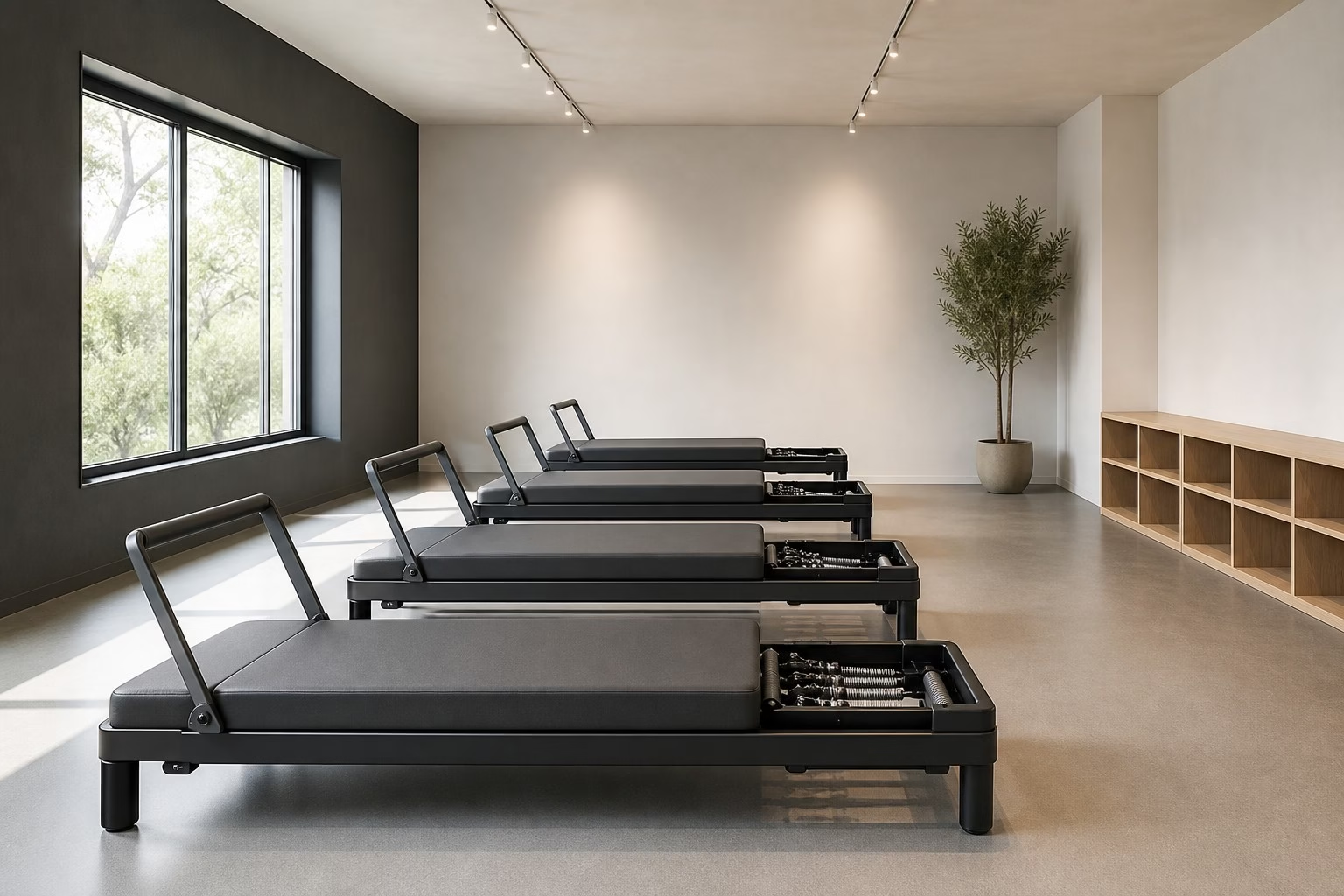
A distributor in Toronto called me last month with a problem I hear almost every week. She had a client opening a boutique studio with 900 square feet. The client wanted a megaformer class setup. She quoted three long machines. Then the client sent back a photo of a microformer from a Lagree studio and asked why the unit price was so different. Two machines. Same brand language. Completely different products.
That mix-up costs people real money. I sell pilates equipment straight off the factory floor, and the three names buyers throw around all day — megaformer, microformer, xformer — get used as if they were trim levels of one machine. They are not. They are different architectures, built for different rooms and different class formats.
Here is how they actually differ, and how to pick the right one for your studio or your product line. If you are still deciding between the two big families, this is the conversation I have before any quote goes out.
Megaformer is a brand name tied to specific patents. Most factories, including ours, do not print that name on a machine. We describe equipment by architecture instead: full-platform long-carriage machines, and compact short-carriage machines. The marketing terms stuck anyway, because that is what buyers search for.
So when someone says megaformer, I always ask which machine they actually trained on. Nine times out of ten the answer changes the quote.
These are long reformer-style machines mounted on a fixed, elevated platform. The carriage slides inside the frame, the springs add resistance, and the platform raises the body high enough for standing work, lunges and side splits.
What matters when you buy:
If you are stocking this category for resale, the unit that moves fastest is the M3K-type long platform build. It is the shape most of your clients have already trained on, which makes the demo easy.
The compact version keeps the elevated platform but shortens the carriage and narrows the frame. Two things change immediately.
First, space. A short machine fits a home room, a hotel gym, or a small private studio that could never run a full row. Second, the movement library. You lose the long travelling exercises and the wide platform work. You gain a machine that stores against a wall and costs less to ship.
Buyers who regret this purchase usually made the same mistake. They measured the room but not the movement. Walk the class you plan to teach on a short carriage before you commit to a studio fit-out. We keep a full reformer range in both lengths for exactly this reason.
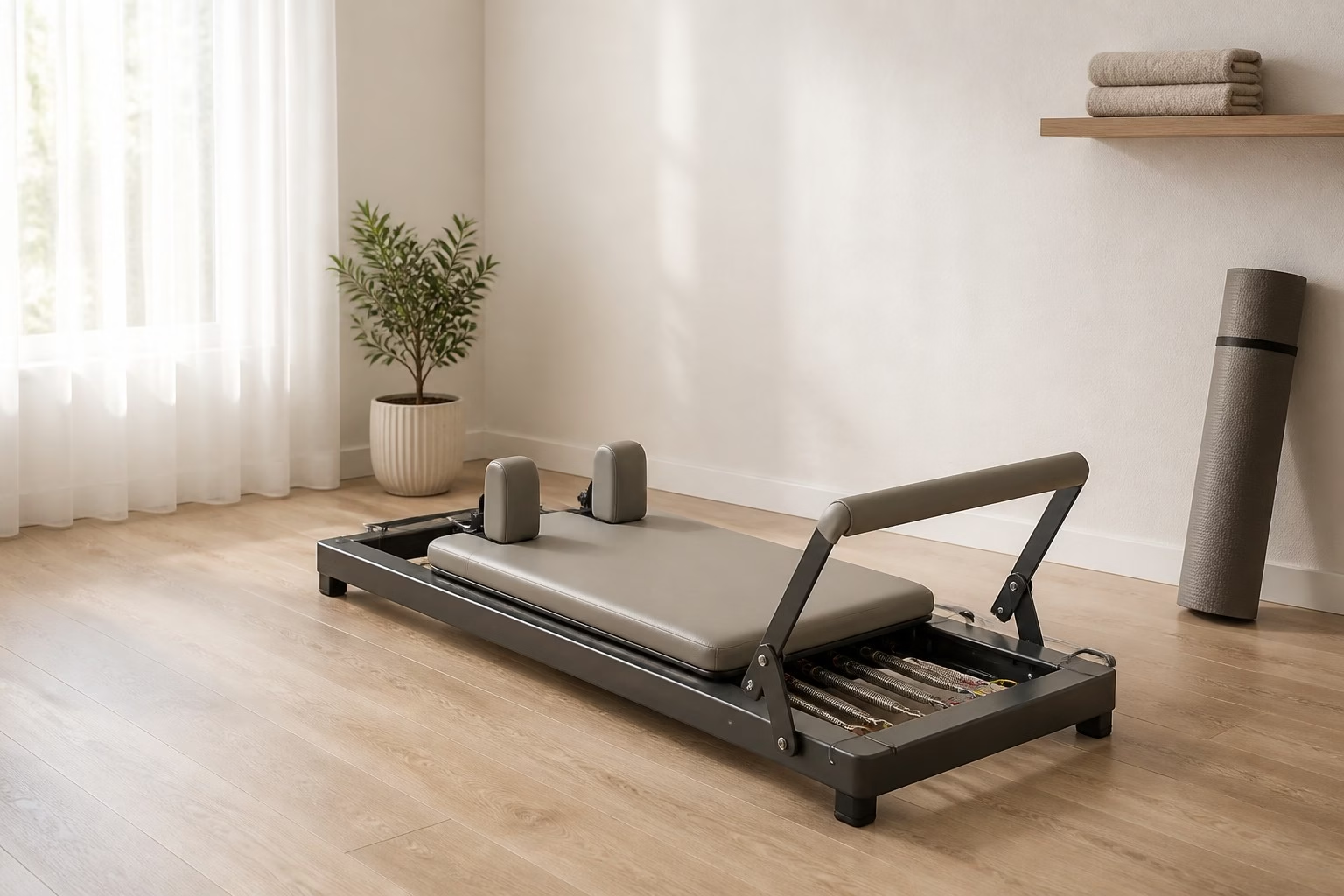
Xformer gets used loosely for reformer-megaformer hybrids — machines that try to take reformer pricing and deliver platform intensity. Some are genuinely well built. Others are a standard reformer with a raised frame and better photography.
Ask for the three numbers that separate them: carriage travel length, spring attachment spread, and total platform height. A supplier who cannot give you those is selling you a rebadged reformer. Ask to see the platform build next to the hybrid before you sign anything.
| What to compare | Full-platform machine | Short-carriage machine |
|---|---|---|
| Typical bed length | About 2.9 to 3.3 m | Roughly 2.2 to 2.5 m |
| Carriage travel | Long, for standing and travelling work | Short, focused on controlled range |
| Floor planning | About 4 to 5 m² per machine including access space | About 2.5 to 3 m² per machine |
| Class format | Slow tempo, constant tension, group rows | Private sessions, small group, home |
| Container maths | Fewer units per container | More units per container |
| Best buyer | Boutique studio, franchise, gym floor | Home user, hotel, physio room, small studio |
Treat those numbers as planning ranges, not quotes. Frame length, packaging size and how you orient the machines in the row decide the real figure.
Work backwards from the class.
For a first boutique studio, most owners I work with land on four to six full-platform machines plus one compact unit for private sessions. That mix keeps the group class full and still gives you a one-to-one option.
Retail pricing in this category is inflated by layers. The same frame that leaves a factory can be resold two or three steps later, each with its own margin.
When you buy direct, ask for the machine as a configuration rather than a catalogue name: frame material, carriage length, spring set, upholstery and footbar type. A factory that works in configurations can also run your logo plate, your colourway and your packaging. A dealer usually cannot.
If you are stocking for resale, start with one sample unit. Ride it for a week. Then order the container.
Is a microformer just a smaller megaformer?
Same family idea, different machine. Shorter carriage, narrower frame, smaller movement library.
Can I teach the same class on both?
No. The travelling exercises do not translate onto a short carriage, and the spring spread changes the resistance curve.
What is the biggest mistake first-time buyers make?
Buying on price per machine and ignoring how many units fit the container. Landed cost per machine is the number that actually matters.
Can I put my own brand on the machine?
Yes. Frame colour, upholstery, footbar and logo plate are all standard customisation points on an OEM order.
Send us your room plan and the class format you want to run. We will come back with a machine mix, a container loading plan, and a landed cost per unit.

