info@wolsports.com
0086 132 8323 3443
Factory price pilates equipments

info@wolsports.com
0086 132 8323 3443
Factory price pilates equipments
Last month a studio owner from Brisbane sent me a floor plan and three phone photos of a space she had just leased. Ninety square metres. One awkward structural pillar. A landlord who wanted the fit-out finished in eight weeks. We went through it together on a call, she redrew the machine layout twice, and the version we settled on turned that pillar into a divider between the mat area and the reformer row.
I am writing this from the road. Our team is setting up at ICC Sydney for AusFitness Industry 2026 on 11 and 12 September. We will be at booth 328.
If you are opening a studio, replacing a tired row of machines, or looking for a supply partner in Australia, this is the easiest place to have that conversation face to face. No email chains. No guessing what a machine feels like from a catalogue photo. Bring your floor plan and we can work on it together at the table.
ICC Sydney, Darling Harbour. That is the venue for AusFitness Industry 2026, the trade show and summit running 11 to 12 September alongside the wider AusFitness Expo.
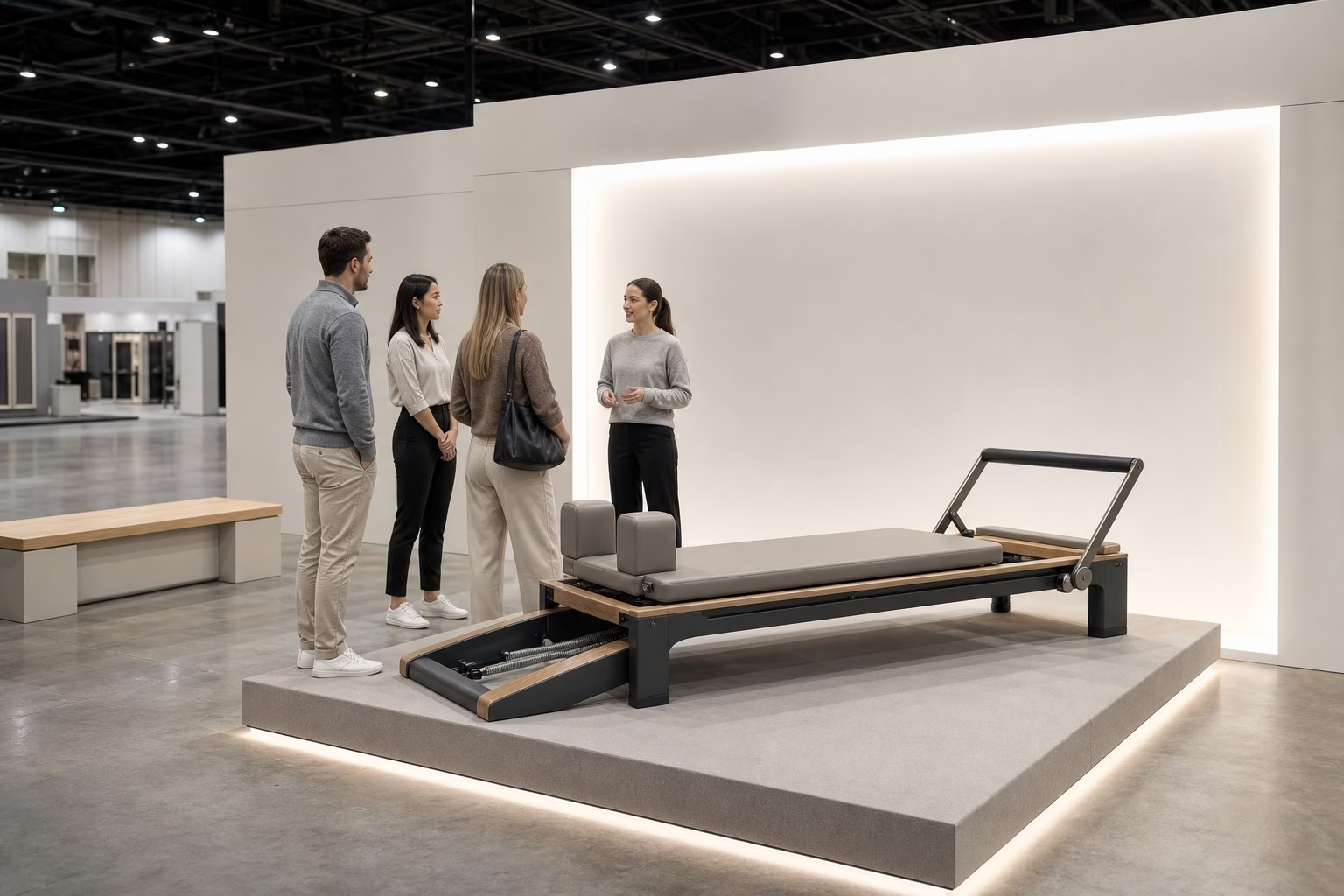
We are at booth 328. Ask anyone on the floor for the pilates equipment stand with the long platform machine out front. Message us before you travel and we will hold a time slot for you.
Two days is not much time at a show this size. If you want a proper conversation about layouts, pricing and lead times rather than a two-minute scan of the stand, book ahead.
We are not shipping the whole catalogue. We bring the machines studio owners actually ask about.
Ride them. That is the point of coming in person. Spring feel, carriage glide, footbar height and upholstery firmness are the four things no spec sheet can tell you, and they are the four things clients notice in their first class.
This is the part that surprises people most. Most suppliers quote you machines. We would rather draw the room first.
The process runs like this. You send us your floor plan — a landlord drawing, a rough sketch, even a photo of a marked-up plan will do. We model the space, then work through the machine layout options with you: how many units fit, which way the row faces, where the walking gap goes, where storage and waiting space sit.
From there you get a 2D plan and a 3D visualisation, so you can see the room before anything is ordered. If it looks wrong at that stage, we change the drawing instead of changing the order.
Bring your floor plan, a few reference photos of studios you like, and your equipment list if you already have one. We will run through it on the stand.
The question we get most in Australia is simple: what does a first studio actually need?
For a boutique studio running group classes, most owners land on four to six reformers, one tower or cadillac for private work, and a mat area for warm-ups. That mix keeps a full class paying without leaving machines idle between sessions.
Space is the constraint people underestimate. A reformer row needs room to walk behind it while a class is running, and that gap is what usually forces a layout back to four machines instead of six.
We price this as a package rather than a shopping list — machines, accessories, spare parts and the drawing work in one number. If you have a budget figure in mind, tell us at the booth and we will build the package around it.
A studio is a brand, not a gym floor. We build to your colourway.
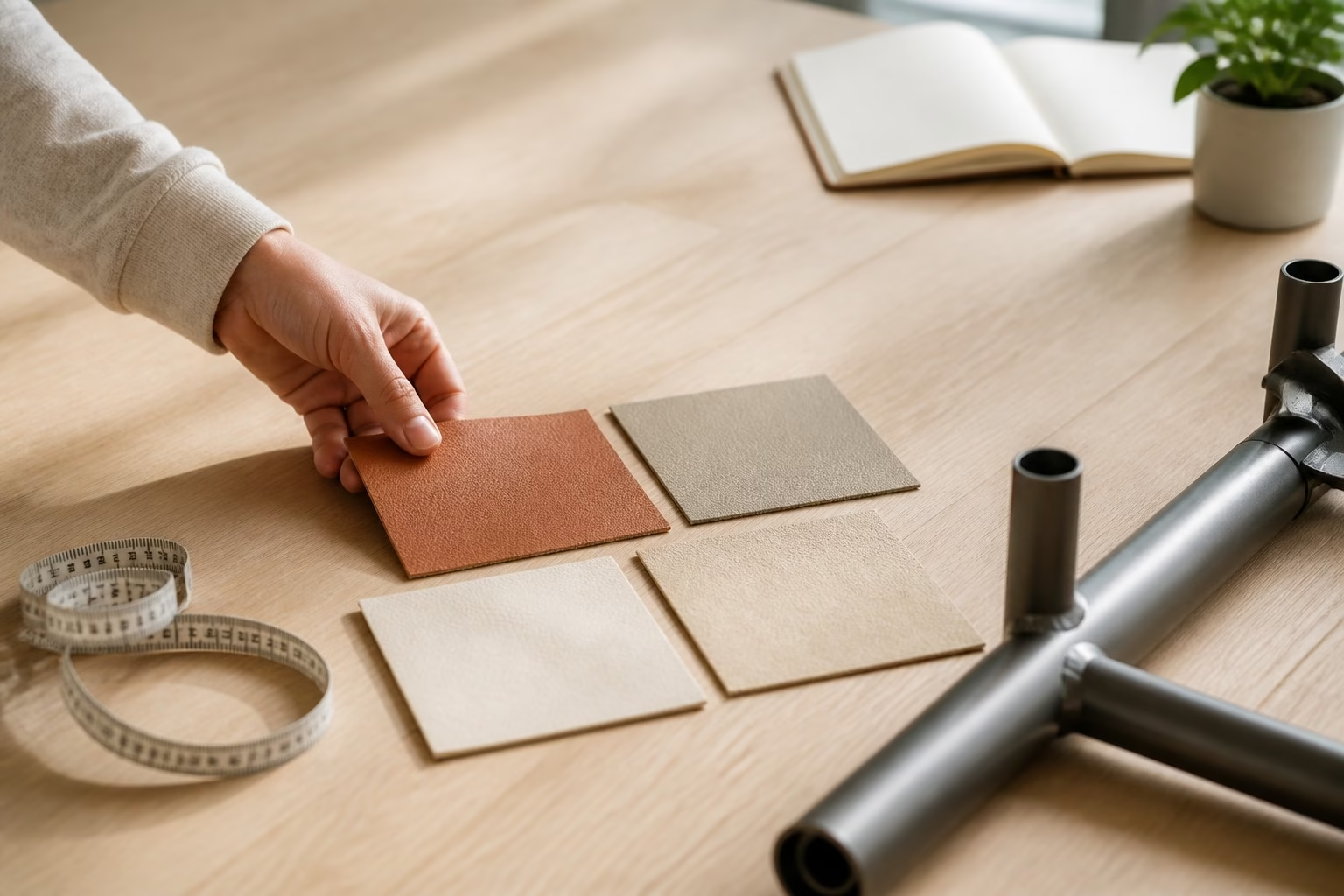
Frame colour, carriage upholstery, footbar type and logo plate are all standard customisation points on an order. If you have a brand colour, bring the swatch and we will match to it. If you are fitting out a boutique with a specific look, this is worth sorting out before the container is loaded, not after.
Sample units are the usual first step. Ride one, live with the colour for a week, then commit to the full order.
Australia is a long way from any factory, and that changes the maths. Freight, duty, port handling and spare parts availability matter more here than they do in Europe.
We work with importers and distributors who want to hold stock rather than ship per order. That usually means a first container, a sensible model mix, and an agreement on spare part supply so you are not waiting eight weeks for a spring set.
If you are already supplying studios and want a second or replacement line, come and talk to us about terms. If you are new to importing, we will walk through landing cost, container loading and lead times so the numbers are clear before you commit.
We would rather spend the two days talking to people who have a real project than handing out brochures.
Send a message and tell us one thing: what you are planning. Opening a studio, upgrading a row, or looking at distribution. That is enough for us to put the right person in front of you at the booth.
If you cannot make it to Sydney, the same conversation happens over a call. Send the floor plan through and we will still draw it.
Send us your floor plan and what you want the room to do. We will come back with a layout, a 3D visualisation, an equipment package and a landed cost. Or come and see it in person at ICC Sydney, booth 328.

