info@wolsports.com
0086 132 8323 3443
Factory price pilates equipments

info@wolsports.com
0086 132 8323 3443
Factory price pilates equipments
A distributor in Rotterdam emailed me last Tuesday with one question. “Can you send one machine first, and let my fitter take it apart?”
That is the real test. Not the catalogue. Not the price list.
I have been on the factory side of these conversations for years. The dealers who survive their first two years ask the same handful of questions before they place a bulk order. The ones who get into trouble skip them. They buy on price, they sign nothing, and six months later they are stuck with a container of machines they cannot service.
So here is what dealer onboarding actually looks like when it is done properly — demo units, trial orders, territory, and training. Four things. All of them boring. All of them the reason a dealership works.
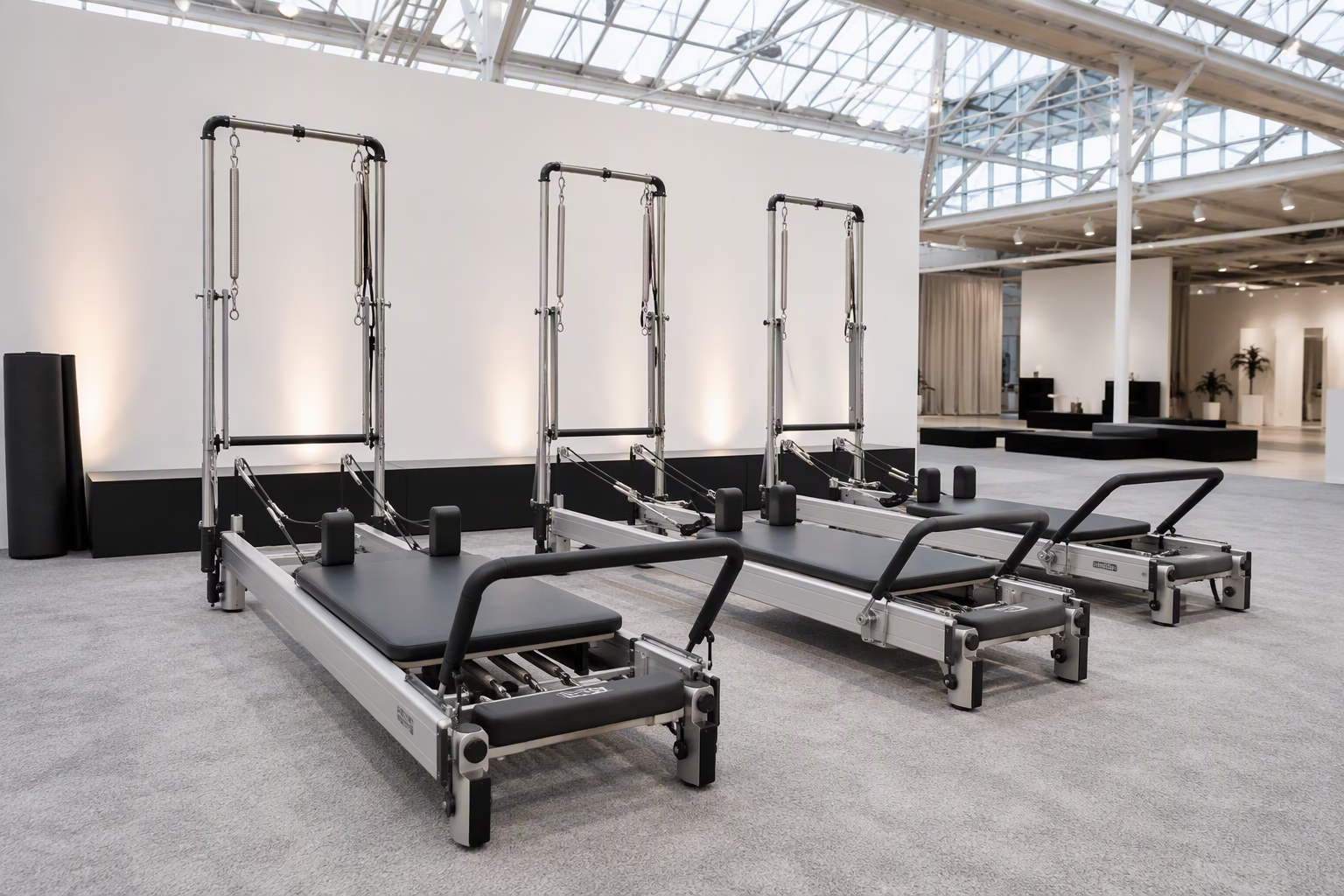
Price is the last conversation, not the first. If a supplier leads with price, ask why.
Ask these instead:
None of those questions are about money. All of them decide whether money comes back to you. A reformer is not a box you resell. It is a machine your customer will use for eight hours a day and call you about when it squeaks. If you cannot answer the squeak question, you do not have a dealership. You have a warehouse.
A demo unit has one job. It shows your fitter and your first client what “good” feels like before you commit to twenty.
Here is what a demo machine should let you do:
One demo unit is not a sample of twenty. Machining tolerances drift between batches, and upholstery colour shifts between dye lots. Treat the demo as a specification check, not a quality guarantee. Keep the written numbers.
If you exhibit at trade shows, order the demo early and travel with a small spares kit — springs, a footbar strap, mounting hardware. Fixing a machine on the booth floor sells more than any brochure. It also tells you something about the commercial reformer range you are about to carry.
Most dealer relationships break at the jump from three machines to thirty. Not because the product fails. Because nobody wrote down what “the same” means.
A workable sequence looks like this:
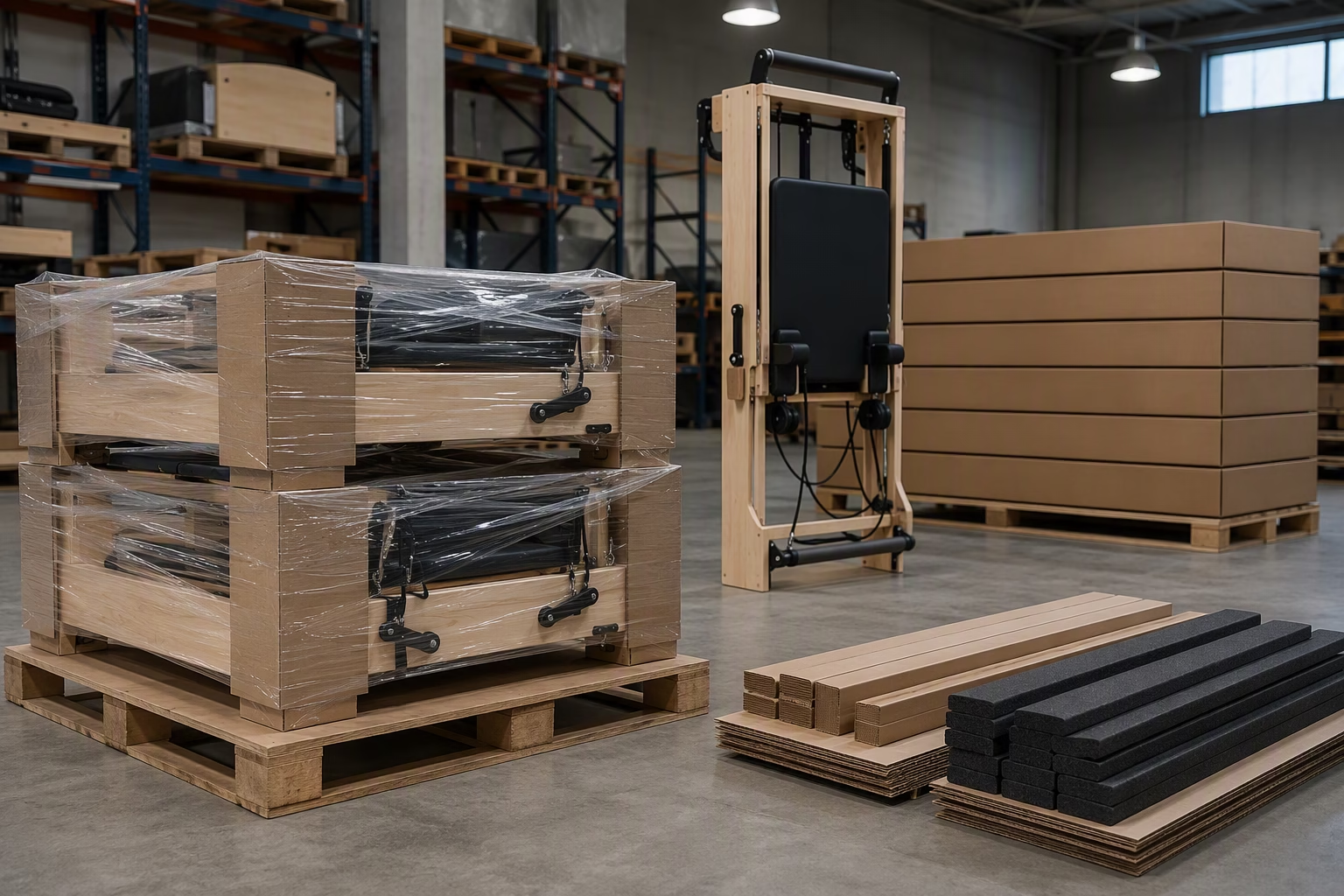
Step one — one unit, paid in full. No discount, no favour. You inspect it, service it, live with it for a month. Do not skip the month.
Step two — a trial order of three to five. Put them into real classes. Different body weights, different heights, hundreds of hours. This is where weak upholstery and tired springs show up.
Step three — bulk, against a written specification. By now you own a document: frame material and wall thickness, spring set and free length, upholstery type and colour reference, carriage dimensions, hardware finish. The bulk order gets matched against that document, not against memory.
Ask for the inspection points in writing too. Frame load test, carriage travel, spring free length, hardware torque. If a supplier cannot name their own checkpoints, they do not have a QC process. They have an opinion.
Payment terms matter as much as unit price. Expect a deposit against production and the balance against documents. Ask what happens if the shipment lands with a bent footbar — who pays, and how fast. Get that answer in an email before you wire anything.
Territory is the part dealers ask me about last. It should be first.
A territory agreement is not a loyalty pledge. It is a description of who sells where, and what happens when that changes. Five clauses carry the weight:
Two things to watch. Read the exclusivity clause for the phrase “best efforts” — it means nothing. Then confirm who carries the warranty obligation after termination. That is the clause that turns a clean exit into a two-year argument.
A dealer who cannot service the machine is a reseller with extra risk.
Technical handover is usually a short, practical session. Be specific about what you want from it. Ask for assembly and disassembly of one complete unit, spring replacement, footbar and rope adjustment, carriage wheel alignment, and a fault-finding walkthrough. Record all of it. Your second and third technicians will learn from the video, not from a PDF.
Then handle the paperwork side. A spare parts list with part numbers. A diagram that matches those numbers. A named contact for technical questions. A phone number that reaches an engineer beats a support portal every time, especially in your first year.
If you sell to studios, ask about end-user training material as well. A short setup and maintenance sheet in your customer’s language lowers your support load more than any discount.
A few honest notes.
Do not choose a supplier on price alone. The cheapest quote usually hides a different spring specification, thinner upholstery, or a hardware finish that will not survive a coastal climate. Compare like for like, in writing.
Do not accept a verbal territory promise. If it is not in the agreement, it does not exist.
Do not assume the second batch will match the first. Measure it.
And if a supplier refuses a demo unit, refuses an inspection visit, or cannot name their QC checkpoints, walk away. There are too many factories that will say yes.
If you are evaluating a line for your market, start with the machine you understand best. The aluminium reformer with tower and the maple wood foldable reformer are two very different conversations — one is a studio workhorse, the other travels. If your market leans toward Lagree-style training, look at the megaformer range separately, because the buy-in, the service model and the class economics are not the same.
Send us your market, your expected volume, and the model you want to put through its paces. We will tell you straight whether a trial unit makes sense for your region, and what the sequence looks like from there.
Evaluating a reformer line for your market?
Send your market, volume and target model. We will come back with a straight answer on demo units, trial orders and timing.

