info@wolsports.com
0086 132 8323 3443
Factory price pilates equipments

info@wolsports.com
0086 132 8323 3443
Factory price pilates equipments
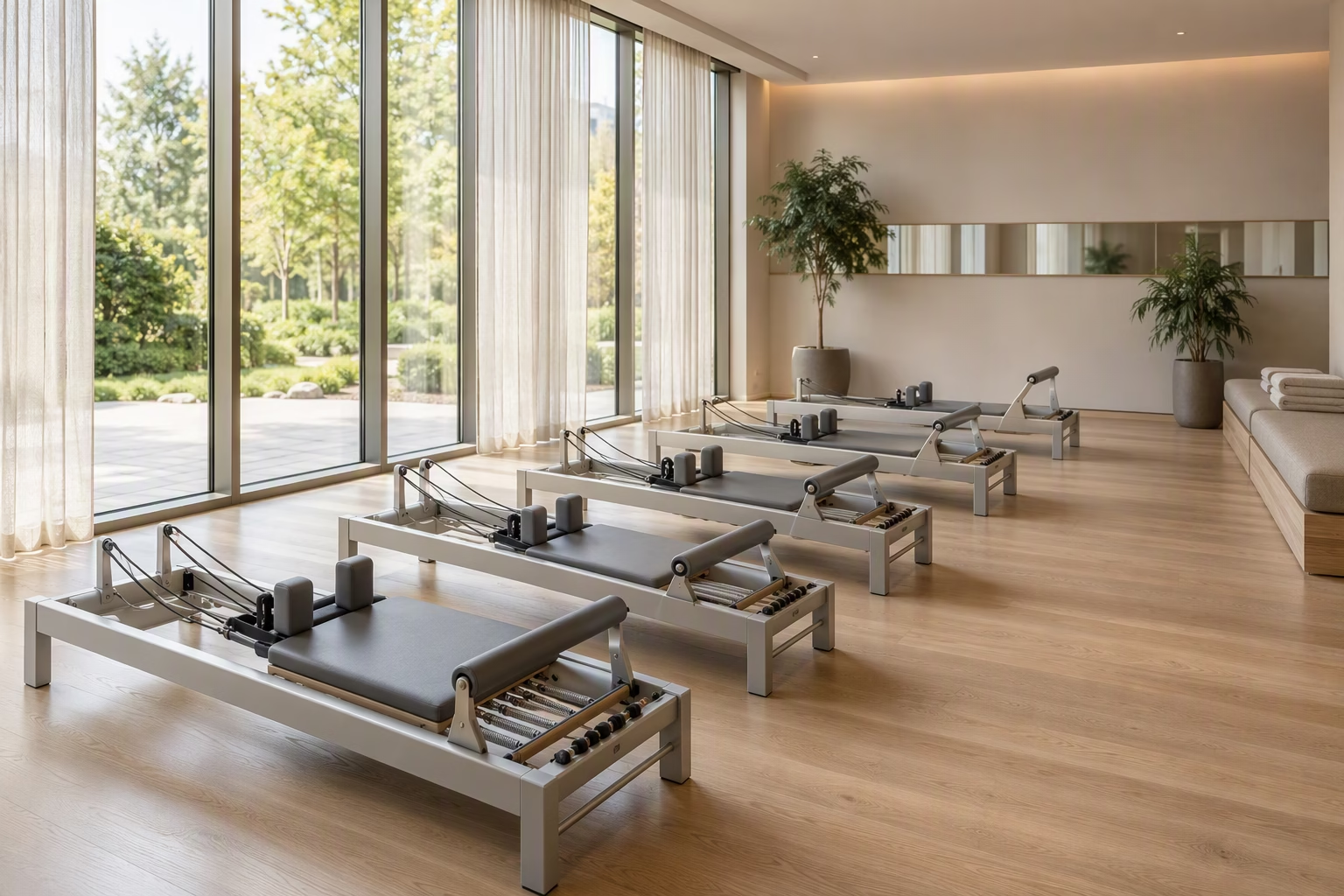
A hotel general manager in Singapore sent me a floor plan last month. Fourteen hundred square feet of former meeting space, one wall of glass, and a budget signed off for eight machines. Her question was blunt. Do I buy the same reformer my studio neighbours buy, or is there a hotel version?
There is no hotel version. That is worth saying first, because the phrase hotel grade turns up in a lot of quotes and it means very little.
What actually changes between a boutique studio, a resort spa, a corporate wellness room and a university recreation centre is not the machine. It is the specification you order, how the machine is stored when the room is empty, and who is responsible when it breaks. I have quoted reformers into hotels, office towers and retirement communities since 2013. The projects that go wrong almost always go wrong at the same three points.
A studio buys machines for people who booked a class. Someone checked them in, watched them step on, and will reset the carriage afterwards.
A hotel buys machines for guests who walk in at six in the morning with no induction, no instructor and no idea what a carriage does. The room is unsupervised for most of its life.
That one difference drives most of the specification. It is why I ask about supervision before I ask about spring counts.
| Channel | Typical order | What decides the spec | What to design out |
|---|---|---|---|
| Hotel and resort fitness centre | 4 to 12 units | Supervision, room noise, storage between sessions | Guests who cannot mount the machine alone |
| Corporate wellness room | 2 to 6 units | Ceiling height, floor loading, cleaning contract | A machine nobody maintains because nobody owns it |
| Health club or membership gym | 6 to 20 units | Daily cycle count, damage resistance | Upholstery that fails in year two |
| Senior living community | 4 to 10 units | Entry height, hand support, supervision ratio | Residents who need two staff to get on |
| Multi-site operator | 20 units and up | Standardisation, spare parts, one price list | Five near-identical variants across twelve sites |
The order size tells you what to negotiate. The channel tells you what to specify.
Hotels are the fastest-moving buyer in this category right now. Wellness travel pushed a lot of properties into reformer studios over the last two years, and many of them had never bought this kind of equipment before.
Two questions decide the build.
The first is supervision. If a staff member runs classes twice a day, you can buy a full-height machine with a normal spring set. If the room is open from five in the morning until eleven at night with nobody in it, you cannot. Guests will stand on the carriage, lean on the footbar and drop the springs. Order a lower entry height, a simpler spring configuration, and put a laminated card on the wall.
The second is storage. A resort that turns a function room into a studio three days a week needs machines that move. Folding frames and stacked storage change the footprint, and the wall protection details matter more than the frame material.
Both come down to configuration rather than brand. Start from the reformer range and then tell us how the room is supervised.
An office buyer usually orders two to six machines and spends six months deciding. Procurement asks for documents a studio buyer never mentions.
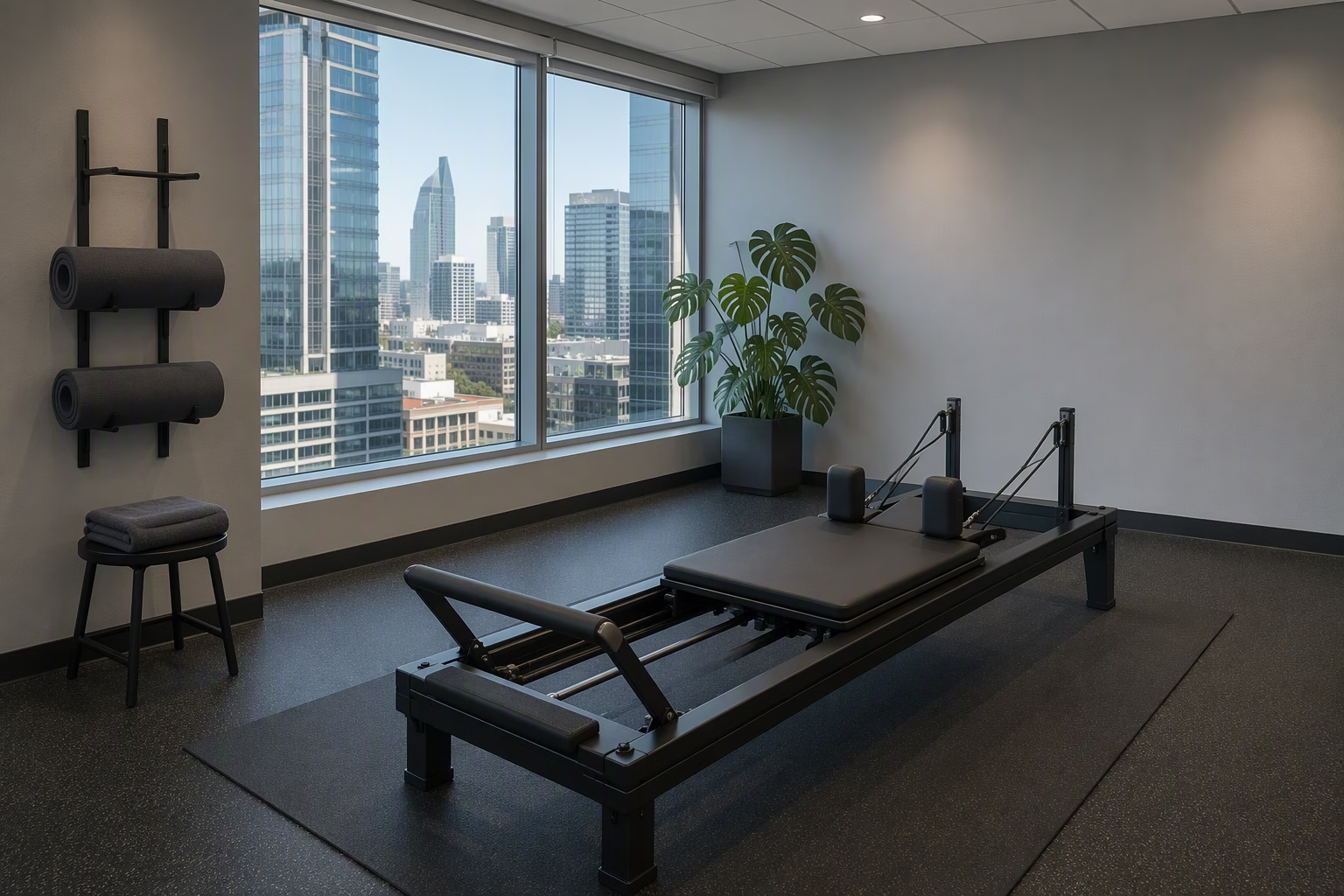
Expect three requests. A drawing with the exact footprint and the weight per unit, so facilities can check floor loading on an upper floor. A clearance figure for ceiling height, because a tower machine in a low room is a head injury waiting to happen. And a written cleaning and inspection routine, because the person who cleans the room is rarely the person who bought the machines.
Floor loading is the one that stops projects. A loaded reformer is not heavy in absolute terms, but it is heavy on four small contact points. Ask for the point load, not just the total weight, and let the building engineer confirm it.
A membership gym runs reformers harder than any studio. Ten classes a day, six days a week, with rotating instructors and no consistent maintenance.
Ask a supplier two things. What cycle rating the carriage rollers and the spring anchors are tested to, and what replacement interval they expect on the upholstery. A machine that feels identical to a studio reformer in a showroom can be a poor fit if the carriage pad is fifteen millimetres of foam on a flat board. In a gym, that pad is gone in eighteen months.
This is also the channel where a megaformer style machine enters the conversation, because the class format is group-based and timed. Same rule applies. Judge it on the parts that wear, not on the colour of the frame.
A retirement community buys four to ten machines and then has to make them usable for residents in their eighties.
Entry height is the first specification, not the last. So is the hand support beside the carriage. A machine that a resident cannot mount without two staff members is a machine that sits idle, and idle equipment is the quickest way to lose the next budget round.
Order the lower frame, ask for a grab rail, and keep the spring set light. The same logic applies when a programme moves into wall-based work, which is where a reformer with tower usually earns its place.
Twenty machines across four sites is a different purchase from twenty machines in one room.
Standardise the model first. Sites quietly order different configurations, and two years later you own five near-identical variants, five sets of spare parts and no leverage on price. Lock one specification, write it into the operations manual, and let the second order repeat the first.
Then negotiate on the parts that repeat: springs, ropes, upholstery covers, carriage rollers. Those line items decide your ten-year cost, and they are the easiest to standardise because they do not change the room layout.
| Specification | Home machine | Commercial machine |
|---|---|---|
| Frame | Light tube, bolted joints | Heavier section, welded and bolted load path |
| Carriage rollers | Standard bearings, quiet room only | Higher cycle rating, serviceable |
| Upholstery | Thin foam, bonded cover | Denser foam, replaceable cover |
| Springs | One set, light range | Multiple ratings, listed as spare parts |
| Entry height | Fixed | Adjustable, plus grab support |
| Documentation | Assembly sheet | Footprint, point load, service intervals |
Ask for all six in writing. A supplier who has quoted into commercial rooms before will have the numbers ready.
The unit price is the smallest number in the file.
Freight and crate size, because a hospitality order moves by sea and the crate decides the freight tier. Lead time, because a property with an opening date cannot absorb a four-week slip. Spare parts availability, because a machine with no listed replacement parts has a working life equal to its first failure. And the service contract, if the property does not employ anyone who can inspect a spring.
Price those four lines next to the machine and the cheapest quote often stops being the cheapest.
Those six answers change the quote more than any negotiation on unit price.
Do hotels need a different reformer from a studio?
No. They need a different configuration. Lower entry height, simpler spring ranges, more durable upholstery, and a storage plan that matches how the room is used. The frame underneath is the same frame.
How many reformers fit in a hotel fitness room?
Plan on roughly 2.5 square metres per machine including a clear walking lane, and keep about 45 centimetres of working space beside each carriage. That puts eight machines comfortably into the room the Singapore GM described.
Can a corporate wellness room take a full tower machine?
Only if the ceiling allows it and somebody on site can inspect it. If neither is true, a low tower or a flat carriage is the safer order.
What is the lead time for a hospitality order?
It depends on configuration, quantity and shipping season. Ask for the figure in writing with the quote, and ask what happens if the vessel is rolled.
Send us the room plan, the ceiling height and who supervises the space. We will recommend the entry height, spring set and upholstery grade for your channel, then quote it with crate size, lead time and the spare parts list.

