info@wolsports.com
0086 132 8323 3443
Factory price pilates equipments

info@wolsports.com
0086 132 8323 3443
Factory price pilates equipments
Upholstery and frame finish decide how a reformer feels in year three. What to specify, and what to ask a factory before you order.
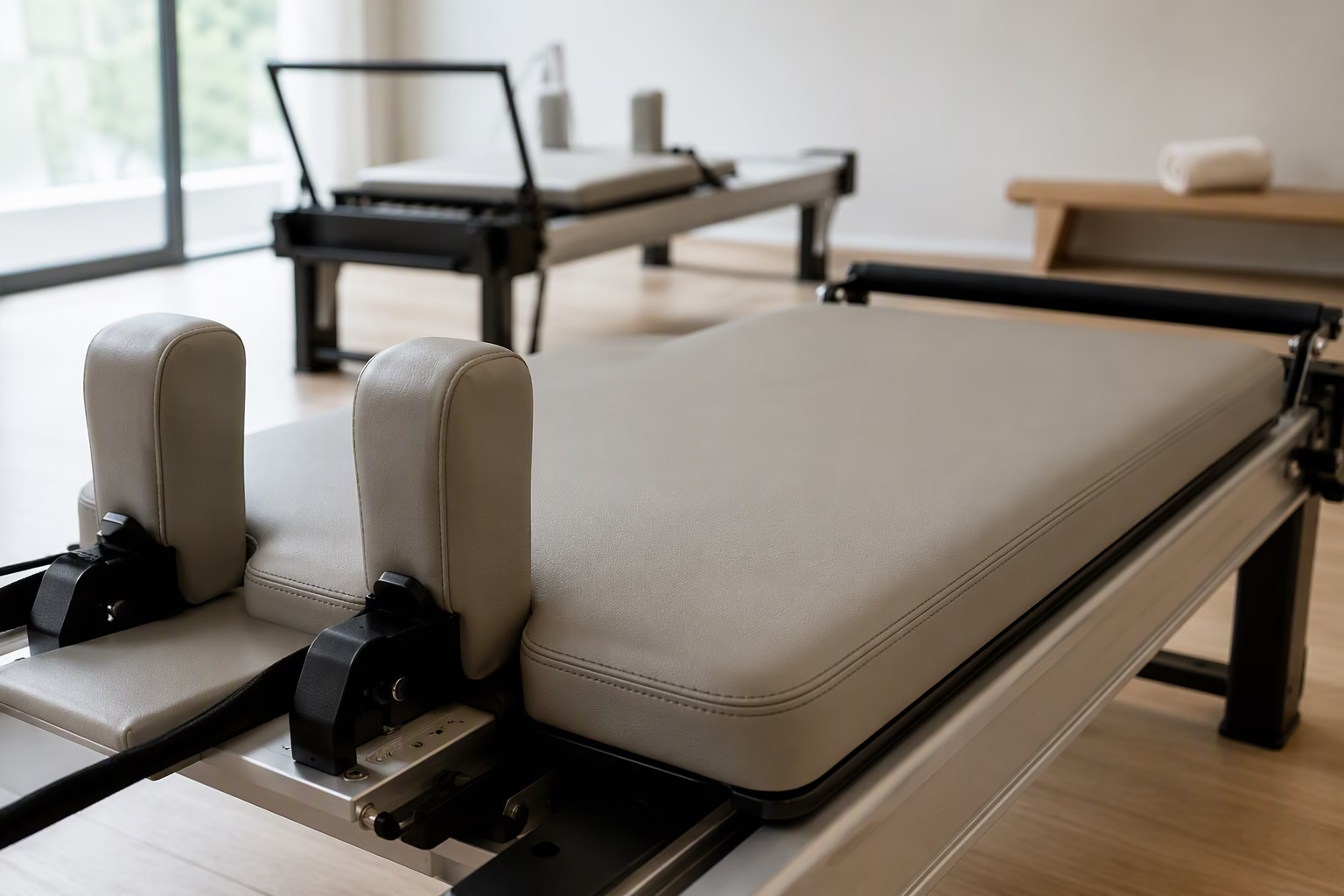
A studio owner in Manchester sent me photos last month. Two reformers, eighteen months old. Both frames were perfect. Both carriage pads had split along the front edge, right where hands grip.
She asked the obvious question. Is that normal?
No. It is what happens when a machine gets specified on frame price and nothing else. Nobody writes upholstery grade onto the comparison sheet, so nobody negotiates it, so nobody gets it.
I have spent years on the factory side of these orders. Upholstery and frame finish are the two lines buyers skim past, and they are the two lines that decide what the machine feels like in year three. Here is what I would put in a spec sheet before signing anything.
Springs can be swapped. Bearings can be swapped. A carriage pad that has gone hard, shiny or cracked is the failure your clients actually touch, and it usually arrives before any mechanical fault.
Three things kill a pad. Sweat and cleaning chemicals attacking the surface. Foam that has lost its resilience under daily load. Stitching that was never designed for the edge where hands pull.
Ask how each of the three is specified. If the answer is a colour and a thickness and nothing more, keep asking.
A partially upholstered carriage carries a separate pad and separate shoulder blocks. A fully upholstered carriage wraps the pad over the carriage edges in one cover.
Fully upholstered looks calmer and gives softer edges under bare skin, which matters in a studio where clients wear shorts and lean on the front of the carriage. Partially upholstered is easier to service: you replace a pad rather than a whole cover set, and the shoulder blocks unbolt on their own.
Neither is better. Choose by how you will maintain the machine. A studio running fifty classes a week should value the replaceable pad. A boutique with a design brief will value the wrapped edge. Just do not let the decision happen by accident.
Marine vinyl is the default for commercial work. It resists water, sweat and most cleaning chemicals, and it wipes down in seconds. The trade-off is heat. Sit on it straight after a hot class and you will know it.
Leatherette is the softer cousin, usually a knit or woven backing with a polymer face. Comfortable, but the backing matters more than the name on the sample card.
Performance fabric breathes and stays cooler. It suits heated studios and equipment that sits in direct sun. It also costs more and needs a different cleaning routine.
Whichever grade you pick, ask for the abrasion test figure and the hydrolysis grade in writing. A swatch without numbers is decoration.
Microfiber leather is a microfiber base with a polyurethane face. It takes stitching well, feels closer to leather than the alternatives, and holds up better than most buyers expect. It is also the most expensive of the three.
PU on a woven backing is the middle option and the most common one on studio reformers. PVC is the cheapest and the firmest, and it is the one that goes shiny first.
The number worth chasing is hydrolysis resistance. In humid markets, coastal cities, tropical ports, unventilated rooms, a PU face can break down from moisture alone. The cover fails without ever being misused. If the specification carries no hydrolysis figure, assume the cheapest grade is inside.
One more question. Can the pad come off without tools? Replacement is a ten-minute job on a well-designed carriage and a two-hour job on a bad one.
Density is how much material is in the foam. Firmness is how much it pushes back against your hand. A dense soft foam and a light firm foam can feel identical in a showroom and behave nothing alike after two years.
Commercial reformers usually land between one inch and one and a half inches of pad. Thicker sounds generous, but a thick soft pad bottoms out and leaves the carriage frame under the client sit bones, which is the opposite of comfort.
Ask for density, thickness and compression set. Then ask what happens to that pad at two thousand class hours. The second question tells you whether the factory has tested the first answer.
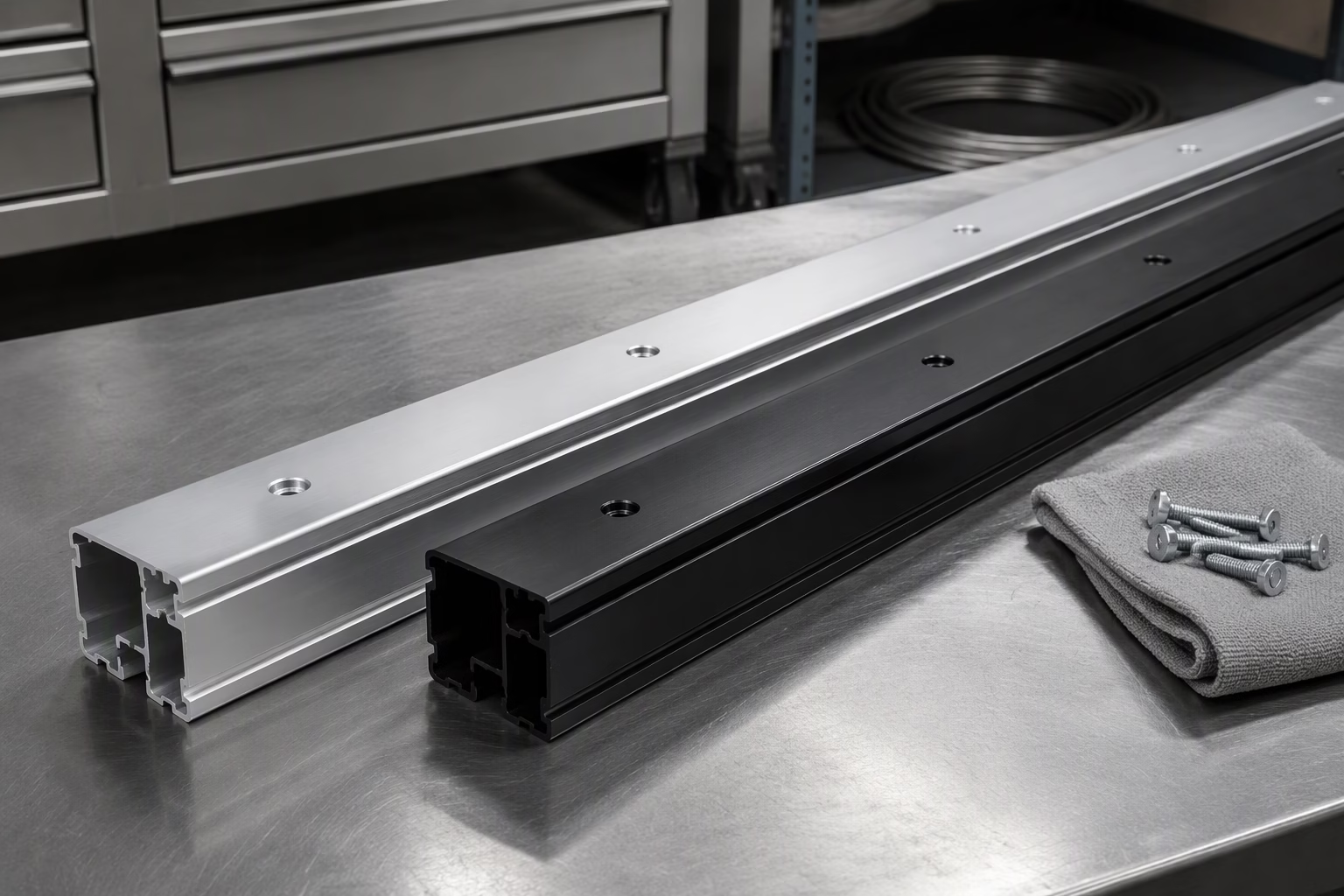
Aluminium frames come in two finishes. Anodizing converts the aluminium surface itself, so the layer cannot flake or peel. Powder coating sprays a film that cures onto the frame, which covers minor surface marks and offers a wider colour range.
On a studio floor the honest difference is repair. A deep scratch in powder coat shows bare metal. The same scratch in an anodized rail is far less visible, and the rail keeps its corrosion protection because the oxide layer rebuilds at the exposed spot.
Check the alloy grade and the wall thickness too. A rail extruded in a proper alloy with a real wall section stays straight under repeated load. Wall thickness never shows up in a product photo, so ask for it on the drawing.
Upholstery, shoulder blocks, springs and straps are consumables. Treat them like tyres, not like warranty claims.
Ask for a parts list with prices, then ask for the same list dated three years out. A supplier who can name a part and price it today can usually still ship it later. A supplier who says contact us when it breaks is telling you something.
Reupholstering is normal maintenance, not a defect. A local upholsterer can recover a pad when the pattern is simple and the fixings are reachable. Ask whether the cover is stitched, stapled or clipped, because that one answer decides whether a local repair is realistic.
Whichever grade you buy, three rules hold.
Wipe after every class. Sweat is the main aggressor, and thirty seconds with a clean cloth beats any deep clean.
Skip alcohol and harsh solvents on polymer faces. They strip the plasticiser out of the surface and leave it permanently dull.
Match the cleaner to the cover: damp cloth and mild soap for vinyl and PU, a pH-neutral cleaner for performance fabric, a dedicated conditioner for genuine leather. Keep a separate cloth for upholstery so the same rag never goes near the rails.
Six lines. That is the whole conversation about how the machine will feel in five years.
Does upholstery grade move the price much?
It moves the price less than buyers assume at the carriage level, and far more at the service level. A cover that lasts twice as long is cheaper than two covers and two refits.
Can I mix materials across one studio?
Yes, and plenty of owners do. Keep the foam density and pad thickness identical so the machines feel the same, then vary the cover grade by room temperature and usage.
How often do carriage pads need replacing?
It depends on hours and cleaning discipline, not on the calendar. Watch for a shining surface, a compressed edge and stitching that has started to open. Those three arrive in that order.
Is anodized better than powder coat?
Neither wins outright. Anodized hides scratches and holds corrosion protection better. Powder coat gives more colour choice and covers surface marks on the frame. Choose by how you plan to touch up the machine.
Materials sit on top of a frame and a carriage system, so specify both in the same document. Our reformer range covers wood and aluminium carriages with tower and half-tower options, and the reformers with tower page lists the tower configurations separately.
Two common starting points: the maple wood reformer, which suits studios that want the classical look with a serviceable pad, and the WT aluminium alloy reformer, which suits high-traffic rooms that need a lighter machine and a finish that survives being cleaned all day.
Send us the cover grade you want, the foam figures you are testing against, and your frame preference. We will tell you what is realistic on your quantity, and what the parts list looks like three years out.
Specifying upholstery and frame finish for a reformer order?
Send your cover grade, foam figures, frame preference and volume. We will come back with the material options, the parts list and a price for your quantity.

