info@wolsports.com
0086 132 8323 3443
Factory price pilates equipments

info@wolsports.com
0086 132 8323 3443
Factory price pilates equipments
A studio owner in Dallas emailed me last week with one line: “If I buy your M3K, can I call my studio Lagree?”
I get a version of that question about once a month. Usually it arrives after someone has already signed a lease, and sometimes after they have already printed a logo.
So here is the straight answer, from the factory side of the table. Buying a sliding spring machine does not give you the right to use the Lagree name. A license does. The two are separate purchases, from separate companies, and one does not imply the other.
That single misunderstanding has cost more than one new studio a rebrand in month three. Let’s take it apart before you spend anything.
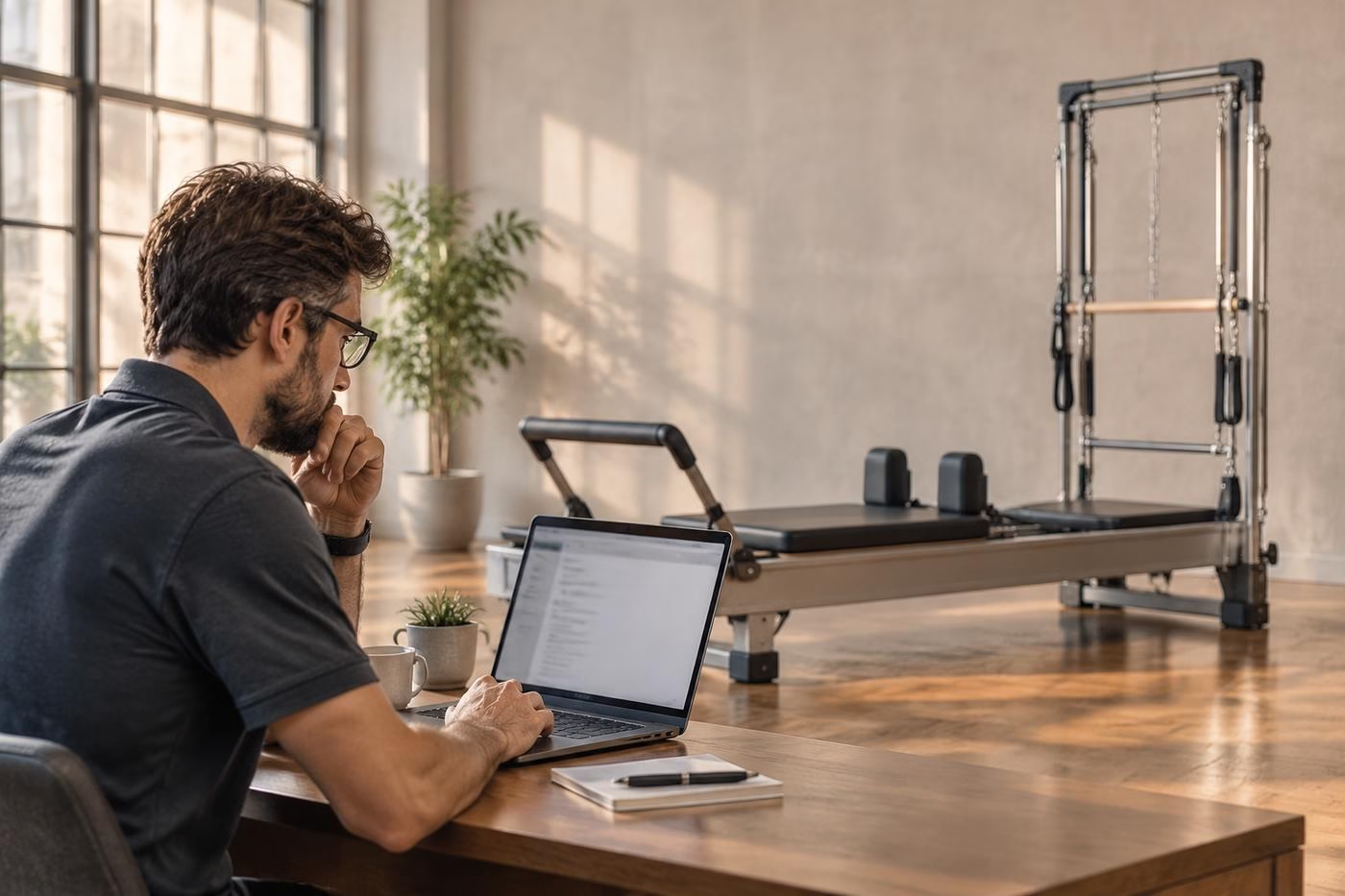
Lagree Fitness runs a licensing program, not a franchise. Their own licensing page is unusually blunt about the difference: you keep ownership and control of your business, and you operate under the Lagree name.
The published fees, as listed on lagreefitness.com in November 2026:
| license type | Annual fee | Scope |
|---|---|---|
| Megaformer / EVO | $3,990 | Per studio, unlimited machines, training not included |
| Miniformer | $1,990 | Per studio |
| Microformer | $990 | Per studio |
| Virtual teaching | $990 | Any machine |
Three details in that table matter more than the numbers.
First, the license is per studio, not per machine. Ten machines, one fee. That changes the maths completely at scale, and it is the reason a five-machine room and a twenty-machine room pay the same annual amount.
Second, training is not included. Instructor certification is a separate programme with its own cost. Budget it as a line item, not an afterthought.
Third, the fee buys naming rights and access to the method ecosystem. It does not buy equipment. Machines are quoted and purchased separately.
Lagree also states there are no royalty fees and no hidden fees, and that the annual license is the recurring cost. Their process starts with a zip code check for territory availability, then machine selection, then licensing and purchasing. Their page quotes four to six weeks end to end.
Do your own check before you rely on any of this. Fees and terms change, and territory rules vary by country. I am quoting a public page, not giving you legal advice.
This is where most of the confusion sits.
A license does not make a third-party machine into a Lagree machine. If you buy a compatible sliding reformer from a factory like ours and then advertise “Lagree classes”, you have the machine but not the right to the name. That is the exposure, and it is a naming problem, not an equipment problem.
A license also does not transfer. Buying a used machine from a closed studio gives you steel and springs. It gives you nothing of the brand.
And a license does not cover your marketing copy, your domain, your Instagram handle or your class names. Those are the exact places where new operators slip.
Every buyer I work with lands on one of these. Both are legitimate. They just cost different amounts and carry different obligations.
Path one: licensed Lagree studio. You license, you buy Lagree machines through their programme, you hire certified instructors, you trade under their name. Highest cost, highest brand recognition, clearest legal footing. The license fee is the smallest part of the budget once machines and certification are in it.
Path two: independent studio. You buy sliding spring machines on your own specification, brand the studio yourself, and teach a method you develop or license from a trainer you hire. No license fee. No use of their marks. You compete on class quality, price and location instead of on a name people already recognise.
Path two is the majority of the market, and it is growing faster than the licensed tier because the entry cost is a fraction of it. It also demands more from you. Nobody hands you a class format or a playbook.
Not with the machine. With the words.
Do not put “Lagree” or “Megaformer” in your studio name, your domain, your logo, your package names or your ad copy unless you hold a license. Both are brand names owned by Lagree Fitness. Descriptive use is a different conversation from branding, and that conversation belongs to a lawyer, not to your machine supplier.
What you can do, and what most of our clients do, is describe the equipment and the training style plainly: a sliding spring reformer, low-impact high-intensity strength training, slow tempo work under tension. Clients understand those phrases. Search engines do too. You lose a little borrowed credibility and you keep your brand clean.
If your model is a licensed studio, get the territory confirmation in writing before you sign a lease on a room. A zip code that is already taken is a very expensive thing to discover after the deposit clears.
Once naming is settled, the machine becomes the real decision. Four things decide whether a sliding reformer survives a commercial timetable.
The spring stack. Ask for the actual rated loads per spring, not a colour chart. A stack that jumps straight from light to heavy loses the middle of the class vocabulary, which is where most clients live.
The carriage. Roller quality and track stiffness show up at month six, not week one. Ask what happens when a bearing fails and how fast a replacement ships.
Handle and platform geometry. Height and reach decide whether tall instructors can teach eight classes a day without folding forward. We publish those numbers per model for exactly this reason. The M3K Type sits at 940 mm handle height, the MegaPro Type at 850 mm, and that 90 mm changes who can teach on it comfortably.
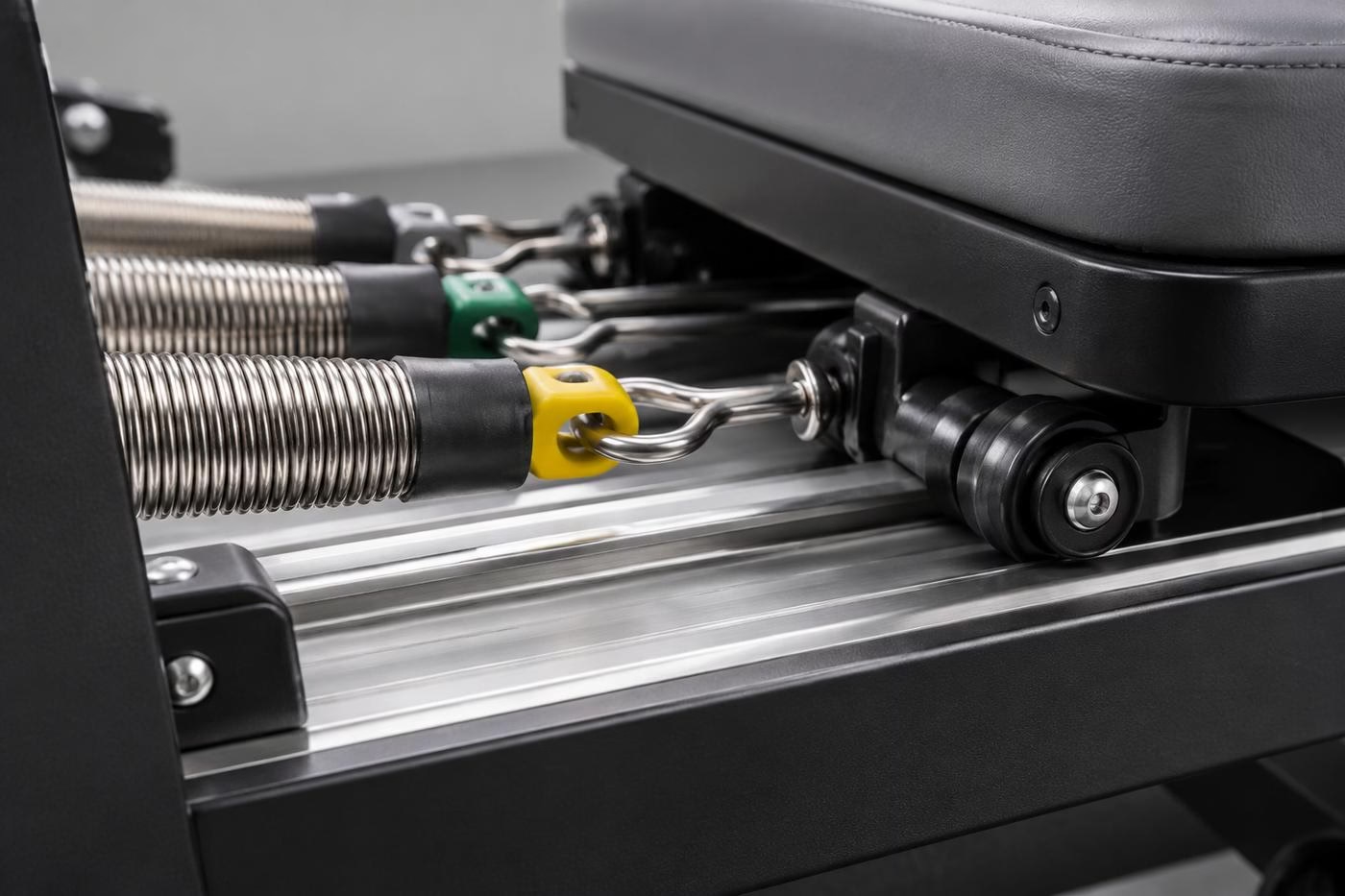
Parts continuity. Springs, straps, rollers and upholstery are consumables. A machine with no parts channel is a five-year machine whether the frame lasts twenty or not. Our parts catalogue and the megaformer range both list what is replaceable.
A rough comparison for a ten-machine studio, using published license fees and typical factory pricing. Machine costs vary by specification, so treat the second column as a shape rather than a quote.
| Licensed Lagree studio | Independent studio | |
|---|---|---|
| Annual license | $3,990 | $0 |
| Machines | Through Lagree programme | Direct from factory |
| Instructor training | Official certification, separate fee | Your own hiring and training |
| Brand use | Lagree and Megaformer permitted | Your own brand only |
| Class format | Provided through the ecosystem | Built by you |
The license line is not the expensive part. Certification and machine specification are. That is true on both paths, which is why I tell buyers to settle the naming question first and the equipment question second. Naming determines who you can buy from. Equipment determines what your classes feel like.
We build sliding spring reformers and megaformer-type machines in our own factory. We sell to studio owners, distributors and gym operators directly.
We do not sell licenses. We cannot get you territory, and we do not advise on trademarks. Model names like M3K Type or MegaPro Type are our internal descriptors for geometry and spring configuration, and they travel on our invoices, not on your storefront.
What we will do is tell you honestly which of our models matches the training style you plan to teach, and what it costs to ship ten of them to your door. That part is our job.
If you are in the middle of this decision, send me your room dimensions, your class format and your target opening date. I will come back with a layout and a cost breakdown you can put in front of a landlord or a bank.
Tell us the room size, the number of machines and the market you are opening in. You will get a straight answer on specification, lead time and landed cost — no license advice, no pressure.
Fees, license terms and territory rules are set by Lagree Fitness and change without notice. Confirm current terms directly with them before you commit. This article describes a public licensing page and our own manufacturing experience; it is not legal advice.

