info@wolsports.com
0086 132 8323 3443
Factory price pilates equipments

info@wolsports.com
0086 132 8323 3443
Factory price pilates equipments
Half cadillac conversion, springboard or wall unit: how studio owners add tower work without losing floor space.
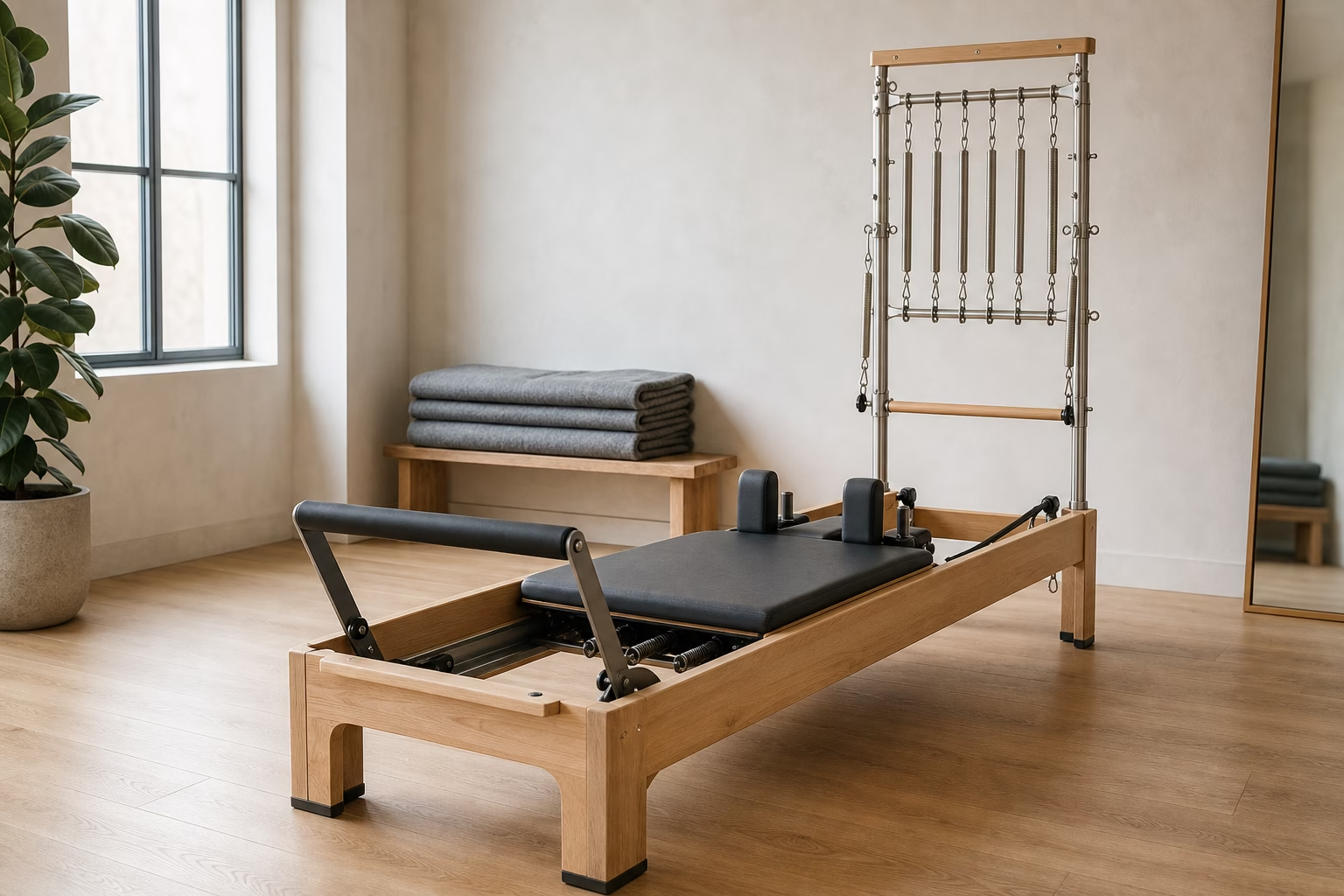
Last month a studio owner in Rotterdam sent me a photo of her back wall. Two reformers, a mirror, and about ninety centimetres of bare plaster above the head end of each machine.
Her question was short. Can I turn these into half cadillacs, or do I have to sell them and start again?
I have answered some version of that question most weeks for three years now, and the answer almost never starts with the machine. It starts with the word. “Half cadillac” is a nickname, not a specification, and three different products get sold under it. Pick the wrong one and you spend the money twice.
A half cadillac is a reformer with a vertical frame fixed to the head end. That frame carries springs, a roll-down bar, and usually a push-through bar. Suppliers call the same object a reformer with tower, a tower retrofit, or a half trap. The photos look identical. The engineering does not.
The full cadillac is a different animal. It is a standalone table with a wide trapeze, its own mat platform, and spring anchor points on all four sides. You do not convert a reformer into one, and any supplier who tells you otherwise is selling you a tower with a generous name.
One detail divides the two families cleanly. Look for the push-through bar above the headrest. If it is there, you have the full exercise repertoire. If it is missing, you have most of it, and you will notice the gap the first time a client needs traction work.
This is the route I recommend to roughly seven studios out of ten, and the reason is structural rather than commercial.
When a factory builds the tower onto the frame, the frame is designed for that load. The uprights are welded or through-bolted to a crossbar that ties into the main rails. The result is one rigid unit that does not flex when a client hangs off the roll-down bar.
A retrofit cannot always reproduce that. It depends on what you already own.
Ask two questions before you order. Is the tower welded to the frame or bolted on as an accessory? And does the tower load travel into the frame, or does the tower carry itself on its own feet? The second answer matters more than most buyers expect.
Our aluminium and wood reformers with tower are built as one unit for this reason.
Retrofit is the cheapest path when your existing reformers are less than four or five years old and still on the original frame. It is the most expensive path when they are not.
Three things decide it, and you can check all three in an afternoon with a tape measure and a torch.
If two of the three do not line up, buy new machines with the tower built in. I have watched studios spend a full season and most of the saving trying to make a conversion kit fit.
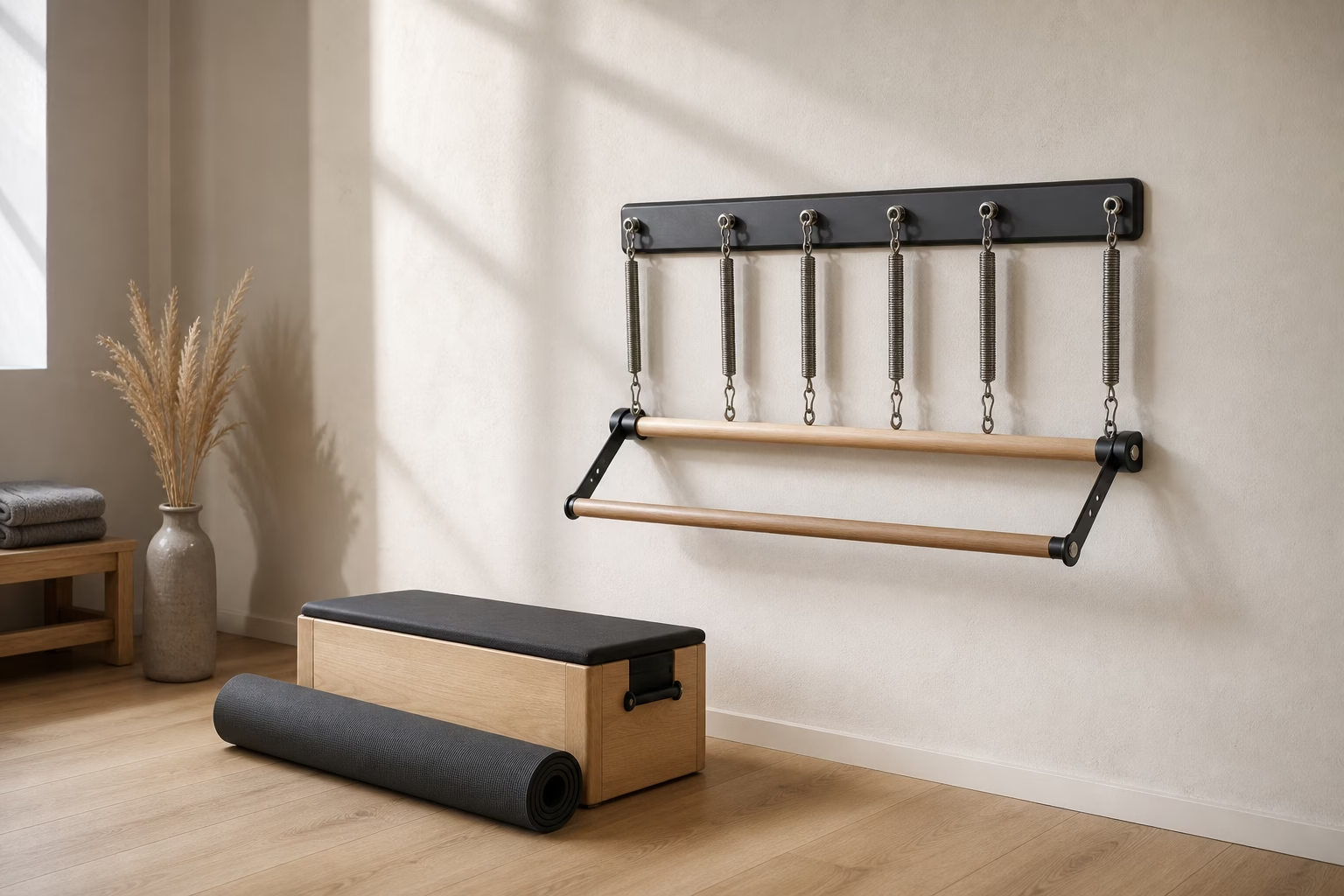
The springboard is a mounting plate fixed to the wall, carrying springs on eye hooks, a roll-down bar and a short push-through bar. That is the whole product. It is the cheapest way to add tower work to a room.
What you gain is floor space. The springboard has no floor footprint at all, only wall. For the Rotterdam studio with ninety centimetres of bare plaster, it was the answer, and she added two stations for less than the price of one tower reformer.
What you give up matters as much. There is no carriage, so no footwork and no leg press. The height is fixed, so a very tall client and a very short one use the same anchor points. And one person works at a time.
Anchoring is the part people get wrong. Drywall anchors alone will not hold a spring under tension for years. Fix the plate into studs, or into a properly braced spreader plate. A wall unit on a partition wall needs the same conversation.
Some studios should stop converting and buy the real thing. If you run one-to-one rehab, prenatal work, or an advanced client group that uses the trapeze, a dedicated cadillac earns its floor space.
The trade-off is simple. A cadillac takes a room. A tower reformer takes nothing extra. Our cadillac and trapeze range is usually specified alongside standard reformers rather than instead of them, because the two serve different hours of the day.
A wall unit is the springboard idea taken further. Same mounting principle, more anchor points, more accessories, and often a taller frame. It suits a studio that wants tower work without buying tower machines at all.
Two numbers decide whether your wall can take one. Where the studs are, and how much clear height sits above the plate. A wall unit needs roughly a metre of unbroken wall per station and enough headroom for a standing client to reach up without hitting a beam.
Every order we ship includes a box conversation, because buyers either order two boxes when they need one, or none when they need one.
A short box sits on the carriage. It is what you use for the short box series, side work and the seated reach work in most classes. If you own one box, own this one.
A long box runs the length of the carriage and turns the machine into a mat bench. Studios with a wall unit or a ladder barrel get more from it, because the long box is what makes the wall station usable for supine work.
If you are ordering a tower reformer for the first time, order the short box. Add the long box when you add wall stations.
A supplier who answers all six in writing is easy to build a studio with. Any of these machines can be specified to order, which is why we ask about your room before we quote a price. Start with the reformer range and tell us the wall you have.
Can one tower reformer replace a separate cadillac?
For most private studios, close to it. A tower reformer covers the reformer repertoire plus standing and suspended tower work in one footprint. It will not match a cadillac on trapeze width or the number of spring anchor positions, so studios running advanced one-to-one work usually keep both.
Is a springboard as good as a tower?
No, and it is not trying to be. A springboard gives you wall-based spring work with zero floor footprint at the lowest cost per station. A tower gives you the same springs plus the carriage. If you need footwork, you need the reformer.
What is the difference between a half cadillac and a full cadillac?
The tower height, the width of the trapeze, and the push-through bar above the headrest. A half cadillac is a reformer with a vertical frame. A full cadillac is a standalone table with a mat platform and springs on all four sides.
Do I need a long box or a short box first?
Short box first. It sits on the carriage and covers the standard class work. Add the long box when you add wall stations or a ladder barrel, because that is where it earns its place.
Send us your room dimensions and the back wall you are not using. We will tell you whether a tower reformer, a springboard or a wall unit gives you the most stations for the money, then quote it with crate size and lead time.

