info@wolsports.com
0086 132 8323 3443
Factory price pilates equipments

info@wolsports.com
0086 132 8323 3443
Factory price pilates equipments
A studio owner in Texas sent me her budget sheet last March. Twenty-four thousand dollars for equipment. Twelve reformers.
I had to tell her twelve machines would eat that entire number before freight.
She had built her plan around rent and a class price. Nobody had shown her the equipment line first.
This happens most weeks. So here are the numbers in the order they hit your account.
Studios we quote for usually open between $70,000 and $180,000 all in. That covers equipment, fit-out, and enough runway to survive the first quiet quarter.
A single room with six reformers and an existing floor can open under $60,000. A 2,000 sq ft flagship with twelve machines, a reception build and a second studio room passes $250,000.
Two decisions drive almost all of that spread. How many machines you buy, and how much of the room you rebuild.
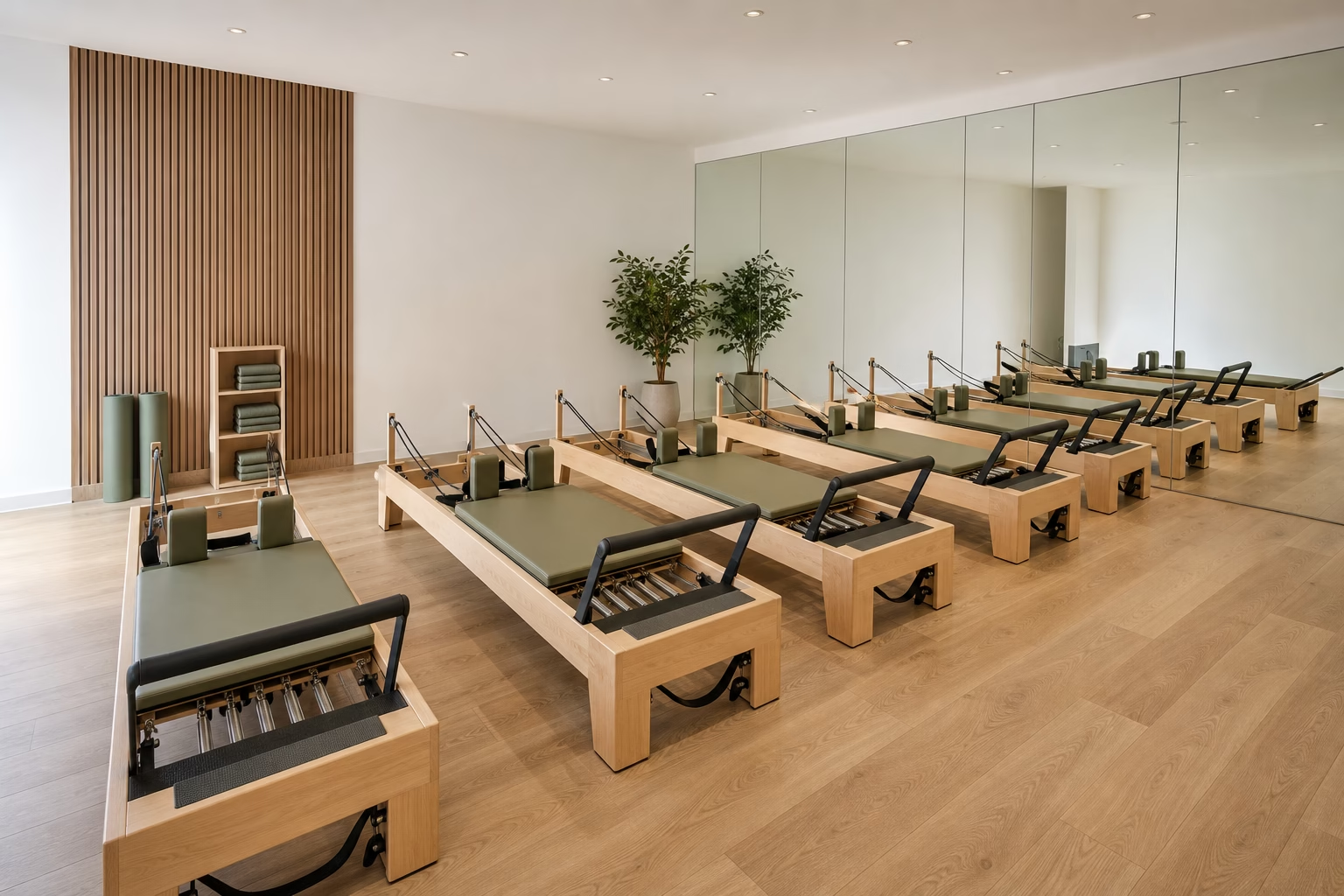
Machines are usually 30% to 45% of the total budget. That is the largest single block, and the one where owners most often guess.
Three variables move the number.
Frame material. Aluminum costs more up front and less over ten years of studio use. Wood wins the aesthetic argument and the home market.
Tower or no tower. A reformer with tower adds roughly 15% to 25% per unit, but it replaces a separate cadillac purchase for classes that need vertical work.
Fixed or foldable. A foldable reformer costs a little more per unit and saves you rent every month after that. If your studio shares space, the folding premium usually pays back in under a year.
For the per-unit numbers written out line by line, see our factory price breakdown.
Count backward from the class, not forward from the floor plan.
Small-group reformer classes run six to eight stations in most markets. If you plan to run one class at a time, six machines is the honest minimum. Running two classes back to back in a twelve-machine room sounds efficient and usually sits half empty on Tuesdays.
A safer rule: buy to fill your weakest realistic class, then add three units once you have a waitlist. Waitlists are cheaper than empty machines.
Space matters here too. A commercial reformer needs roughly 90 to 100 inches of length and about 26 inches of width, plus clearance to walk and to load the carriage. Six machines in a 900 sq ft room is comfortable. Twelve in the same room is a hazard.
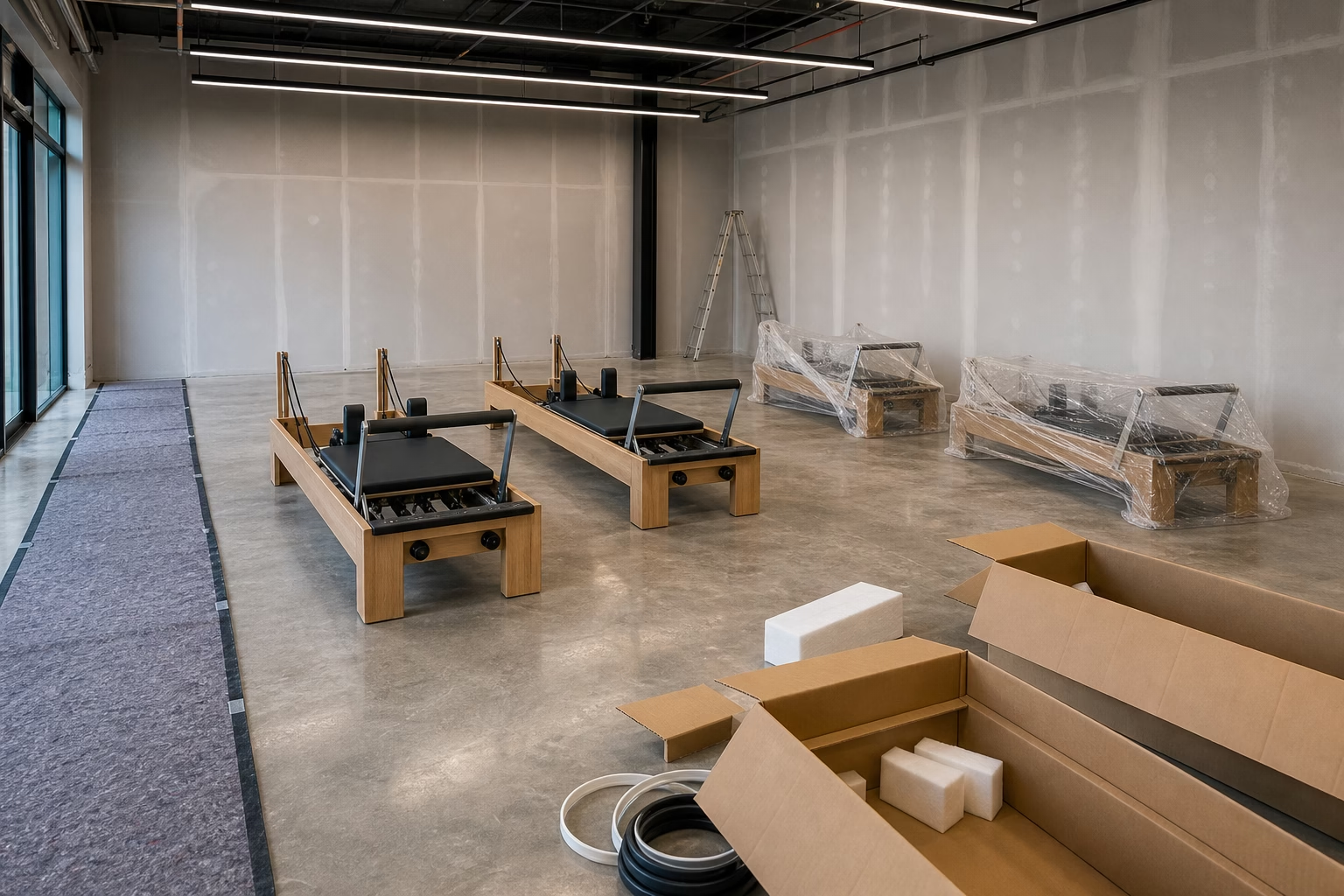
Flooring, mirrors, lighting, a reception counter, storage, and any wall or electrical work. In a leased shell this runs $25,000 to $70,000.
Two items are cheap to plan and expensive to retrofit. A floor that takes rubber matting without lifting, and lighting that does not glare off the mirror wall you just paid for.
Add the boring recurring costs as well. Insurance, software, licensing, and three months of rent and payroll before your class book fills. That runway is part of opening cost whether or not it appears on the equipment invoice.
Now the other side of the equation.
Group reformer classes commonly price between $28 and $45 per session. Monthly unlimited memberships sit around $180 to $320 depending on the city. A six-machine room running five classes a day at 80% occupancy works out to roughly 24 paying stations a day.
Do that multiplication before you order machines. At $35 a class and 24 stations, a strong day is about $840. A studio open six days a week is looking at $18,000 to $22,000 a month at realistic occupancy. Take out rent, payroll, insurance and software, and the equipment budget starts to look like what it is: the asset that has to earn its own payback.
This is the part buyers skip.
If six reformers cost $18,000 delivered and the studio nets $4,000 a month after operating costs, the machines pay for themselves in roughly four and a half months of net contribution. Twelve reformers at $36,000 in the same room, with the same class volume, do not pay back faster. They pay back slower, because the extra stations sit empty.
Order size follows utilisation, not ambition.
That is why we push back when an owner asks for fourteen machines before she has taught her first class. Start with the number that fills your peak class, then scale with demand.
Most owners do not pay cash. The routes we see most often on purchase orders:
Equipment leasing through a fitness-finance lender, usually 24 to 60 months. Terms are friendlier than owners expect, because a reformer holds resale value.
Deposit plus balance on delivery. Typically 30% to 50% up front, the rest before shipment or against the bill of lading. This is standard for factory-direct orders, and it is where the cash-flow crunch usually shows up.
Staged delivery. Some buyers split a larger order across two shipments so the second batch is funded by revenue from the first. It costs a little more in freight and keeps the balance sheet sane.
Whichever route you take, put the payment schedule next to the delivery schedule before you sign. A machine that arrives a month after your lease starts is a month of rent with nothing teaching on it.
Buying premium brand machines for a room that will not be full for a year. The resale argument is real. The cash-flow argument usually wins early on.
Rebuilding a space you are leasing for three years. Fit-out money is hard to recover.
Mixing machine models in one room. Class cues stop working when every station feels different, and you lose the uniformity that makes small-group teaching profitable.
We build studio reformers and megaformer-format machines as a factory, which means the equipment line on your budget can be a quote rather than a guess.
Send us your room dimensions and your planned class size. We will tell you how many machines actually fit, what they cost delivered, and, if the numbers do not work, we will say so before you sign a lease.
If you are still at the planning stage, our studio equipment buying guide covers the full checklist, and this walkthrough of a one-stop studio build shows how the stages fit together.
Send your room plan and your target class size. You will get a machine count, a delivered price, and a realistic payback estimate. No obligation.

