info@wolsports.com
0086 132 8323 3443
Factory price pilates equipments

info@wolsports.com
0086 132 8323 3443
Factory price pilates equipments
Last spring, a studio owner from Melbourne sent me eleven questions in one email. Freight. Customs. Lead time. Deposit risk. He had already wasted two weeks comparing dealer quotes, and he was not even sure the machines came from the same factory. By the end of that call he understood the import path, ordered a container, and paid roughly 40% less than the distributor price he had been quoted.
I handle export at a pilates equipment factory in China. Importers run the same questions past me almost every week. This guide is the route I walk them through, step by step, from first email to the day the container clears customs.
The price gap is real. A commercial reformer that sells for $3,500 through a distributor often leaves the factory for a fraction of that. You are paying for the machine, not the brand markup. Direct import also opens the door to OEM: your logo, your upholstery colors, your packaging. If you plan to build a recognizable studio brand, that matters. Our wholesale buying guide covers the cost side in detail, and this manufacturer checklist helps you shortlist factories.
Anyone can post photos of a clean workshop. Ask for proof instead. Request the ISO 9001 certificate and the CE documentation for the models you want. Ask for a live video call inside the production line. Ask who tests the springs and whether there is a load test on the carriage before packing. A factory that answers these questions without hesitation is usually a factory that has nothing to hide.
Check the business registry, the export license, and real shipment history. If you are starting from zero, browse the pilates reformer range of a supplier and study how each model is specified before comparing quotes.
Most import mistakes start with mixing trade terms. FOB means the price covers the goods loaded on the vessel at the Chinese port. CIF adds insurance and freight to your port. EXW means you arrange everything from the factory door. DDP puts delivery to your door, duties paid, on the seller.
These prices are not interchangeable. A cheap EXW price can become the most expensive option once freight and customs are added. When you request a quote, always ask for the same four things: unit price per model, MOQ, packaging type, and trade term.
Order a physical sample before mass production. A photo is not a sample. Video is not a sample. The sample tells you about weld quality, upholstery feel, spring tension, and finish in a way no picture can.
Standard production lead time in this industry usually runs 25 to 35 days after deposit. Customized OEM orders add roughly four to six weeks because tooling, logos, and upholstery need extra steps. Ask for the lead time in writing and build a buffer for sea freight into your studio opening date.
The common arrangement is a 30% deposit by T/T and the balance before shipment. Larger orders can be covered by an L/C. Some factories accept PayPal for sample orders. Never pay the full amount upfront, and never accept a deal where the supplier demands more than 50% before production starts.
Agree on what happens to the deposit if the factory misses the delivery date. Tie the balance payment to a signed inspection report, not to a promise.
Ask for photos or videos at three points: frame welding, upholstery fitting, and final assembly. Better still, book a third-party pre-shipment inspection. The inspector checks spring count and tension, carriage movement, frame finish, and packaging against your purchase order.
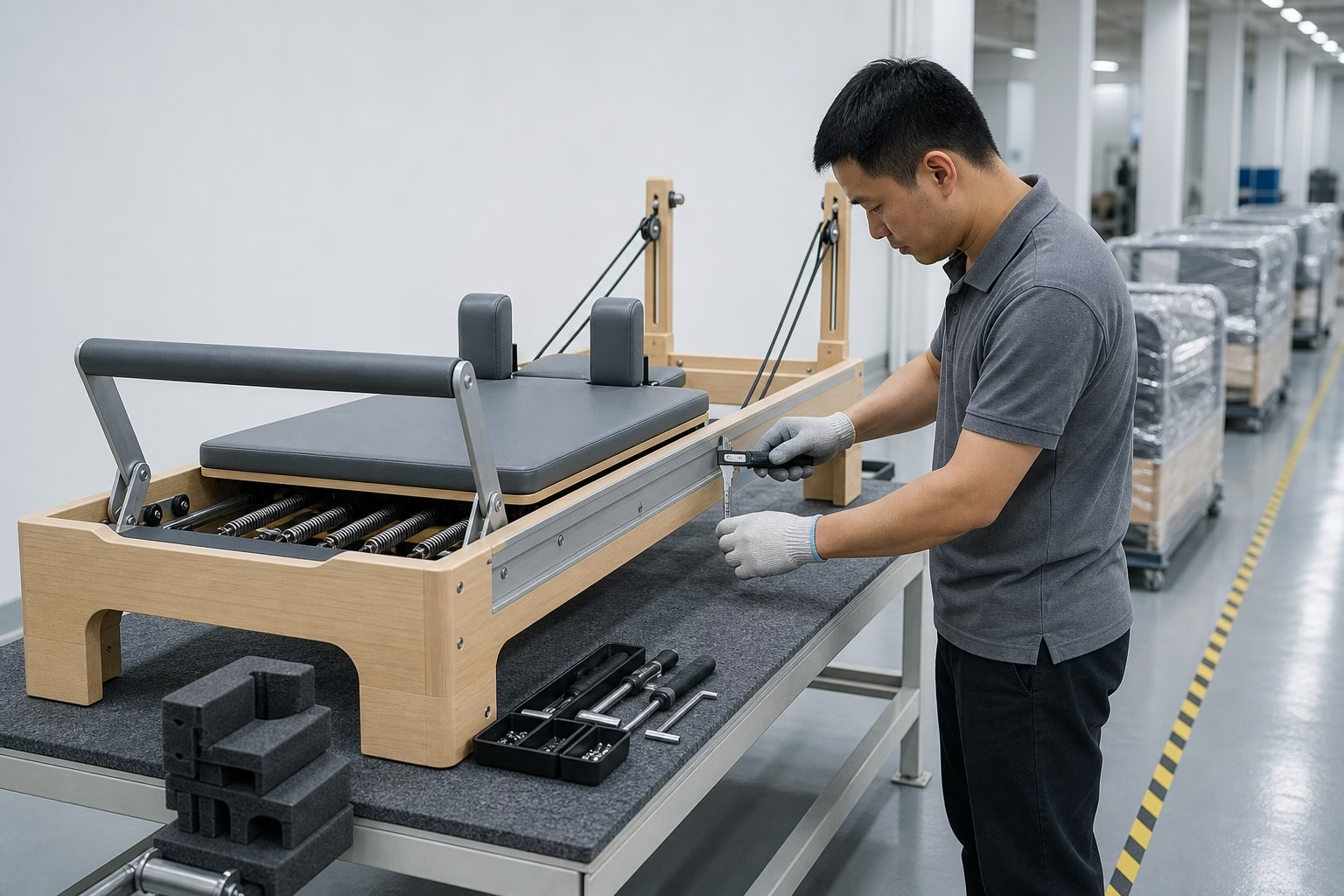
Our own shop tests every reformer before it goes into the carton. We still lose a few machines to shipping damage every year. That is why packing matters as much as production.
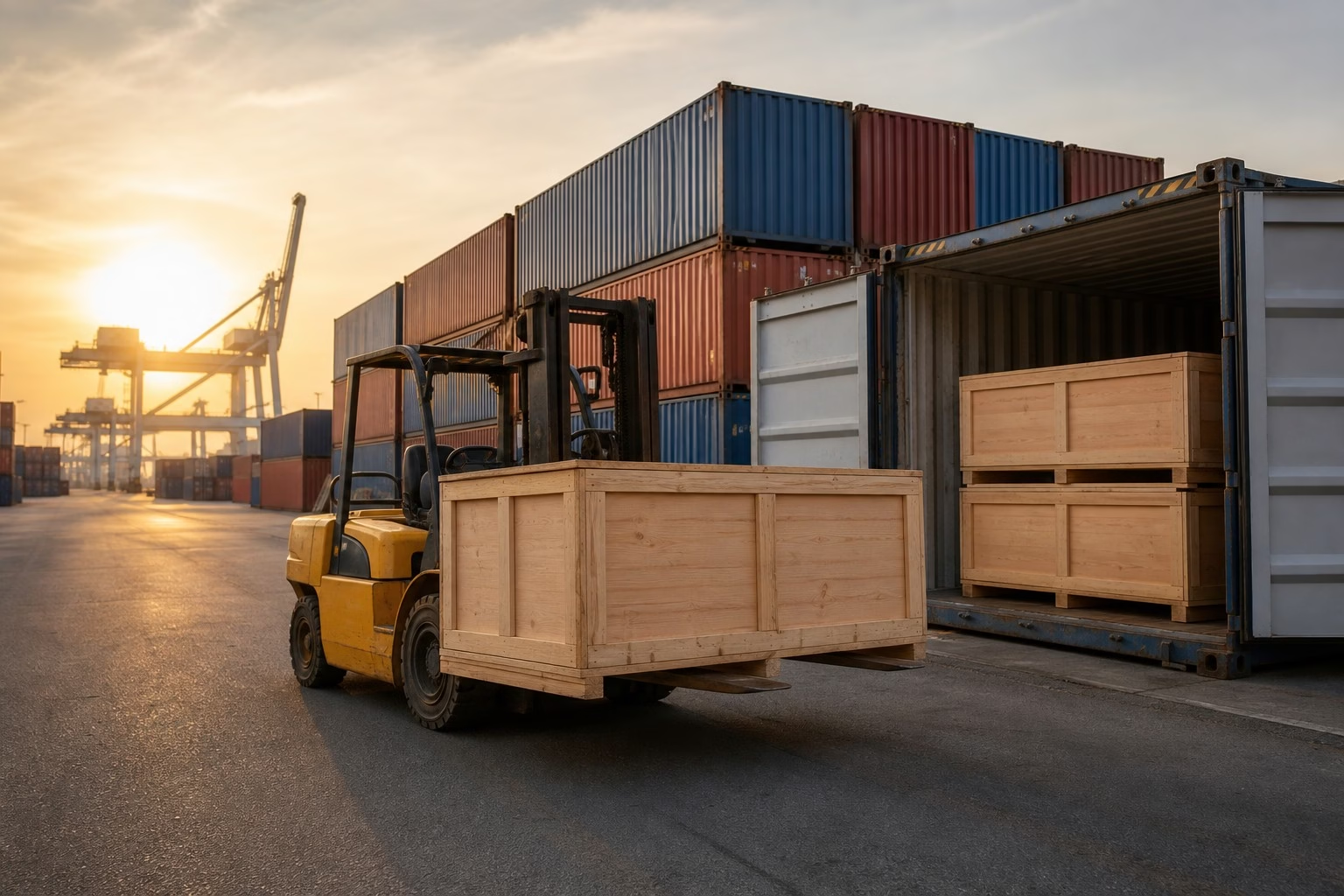
Studio reformers ship in wooden crates. Foldable models can travel in strong cartons, which means more units per container. Do not guess the numbers: ask the factory for a loading plan that shows exactly how many units fit in a 20-foot or 40-foot container. A proper supplier sends one with every quotation.
For small first orders, LCL (less than container load) keeps costs down. Once you pass roughly half a container, FCL often works out cheaper per unit. Air freight makes sense only for urgent small orders and samples. Sea freight from China to Europe or North America typically takes 25 to 45 days, so plan your studio opening around it. Megaformer-style machines, like our M3K type megaformer, travel under the same rules.
You need a commercial invoice, packing list, bill of lading, and the certificates the factory holds. The HS code decides the duty rate, so confirm it with your freight forwarder before shipment. European buyers need CE-relevant documents for fitness equipment. Duties vary by country and by product code; a local customs broker costs a little and saves a lot.
If you are opening one studio and need two machines, buy locally. The freight and paperwork will eat your savings. If you are equipping several studios, selling equipment, or building a brand with your own logo, direct import is where the margin lives. Start with a sample order, protect yourself with inspection, and let the factory carry the details.
Planning your first container?
Get a factory-direct quotation with MOQ, lead time, and a loading plan.

