info@wolsports.com
0086 132 8323 3443
Factory price pilates equipments

info@wolsports.com
0086 132 8323 3443
Factory price pilates equipments
Last spring, a studio owner from Texas emailed me a question I hear more often than you might think: “My reformer says it holds 350 pounds. Is that enough for a men’s class?”
Short answer: yes, for most classes. But the longer answer involves numbers that rarely appear on a spec sheet. If you are buying wholesale, especially from an overseas factory, you need to know what “weight capacity” actually means before you sign the order. Let me walk you through what I check when buyers ask about load limits.
Most factories quote one number: the maximum user weight. Our commercial frames, for example, are rated in the 350-400 lb range, and the exact figure is listed on each product page. That number is the weight the carriage and frame are designed to carry in daily use – not a one-time stress test.
Two different figures matter here:
If a supplier only gives you one number, ask for the test method behind it. A rating with no test behind it is just a marketing claim.
Your clients are not all the same size. Morning classes might be mostly women around 130-160 lbs. An evening athlete class can push well past 250 lbs. A reformer that wobbles under a heavier client is a safety problem, an insurance problem, and a reputation problem all at once.
Commercial machines get used 8-12 hours a day, every day. The frame, carriage bearings, and straps take that abuse constantly. A home-use rating simply does not survive studio life. That is why we build our commercial line with heavier rails and reinforced joints, and why the price difference between home and commercial models is real.
Also consider warranty. Most factories cover structural defects for a set period – ours is 12 months on the frame. But a warranty claim starts with the rated capacity. If a client exceeds the limit and the frame fails, the claim usually dies right there.
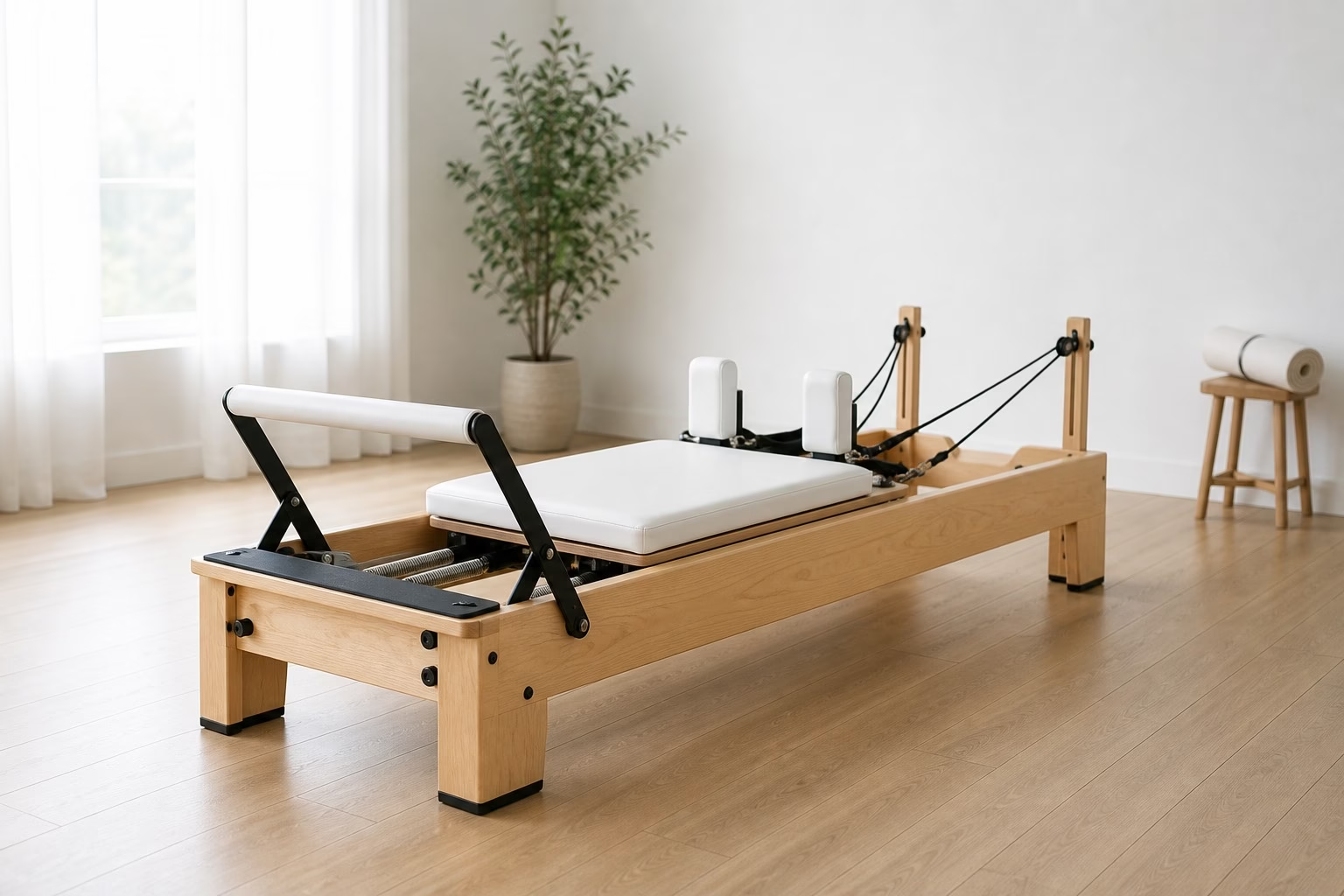
This is the question I get most. The honest answer: frame material matters less than how the frame is built.
Our maple wood pilates reformer uses solid maple with dovetail joinery. The wood carries the load, and the joinery takes the repeated stress of the carriage sliding back and forth. A well-built wood frame holds the same rating as aluminum – sometimes better, because wood absorbs vibration that metal passes straight through.
Our aluminum alloy pilates reformer takes a different route: welded rails, powder-coated finish, lighter total weight. Aluminum is the better choice when you move machines between rooms or fold them for storage. The lo
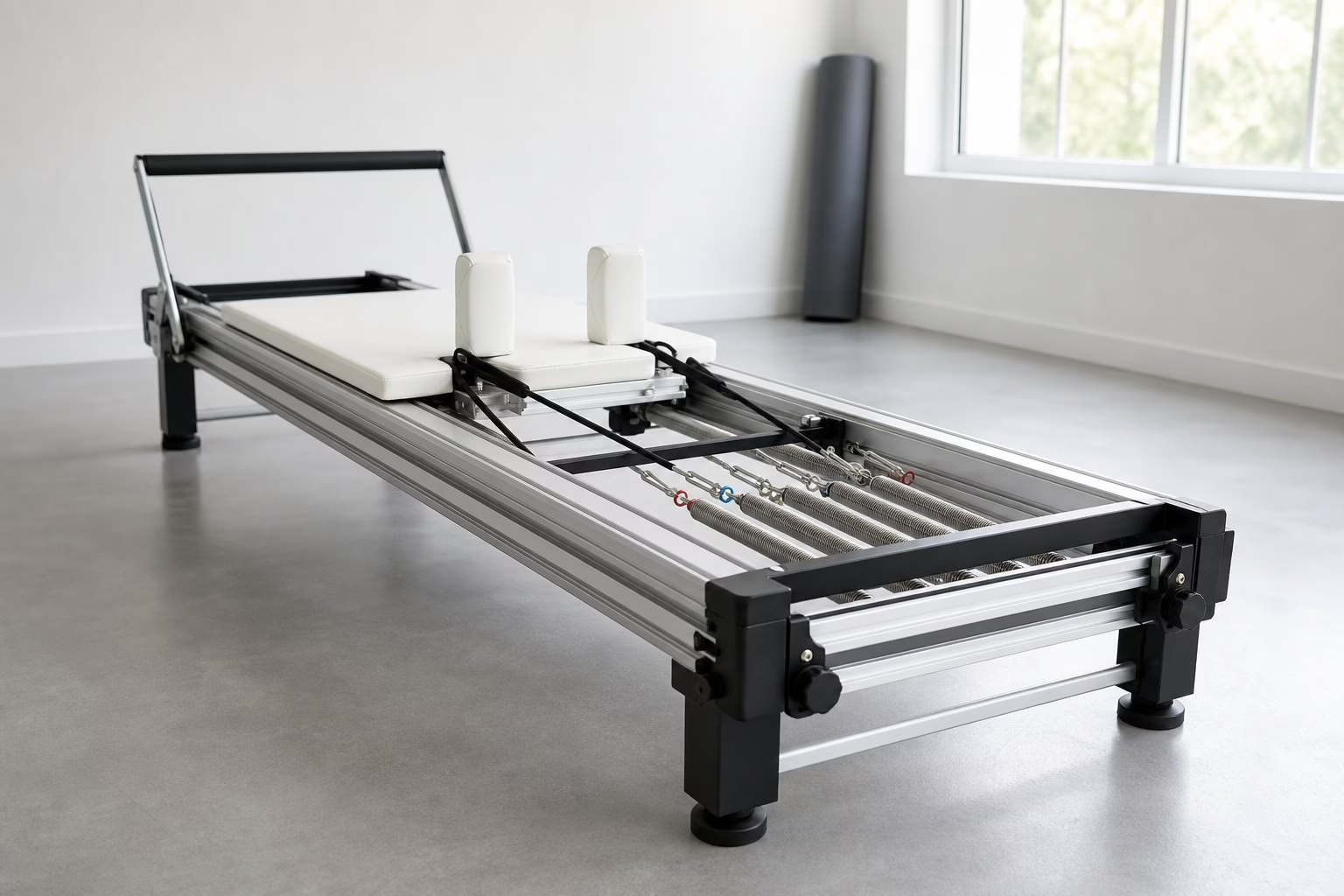
ad rating is similar. What changes is the feel and the maintenance.
So do not pick a frame by material alone. Ask about the joinery, the rail thickness, and the test report. Material is only part of the story.
A lot of buyers assume springs support body weight. They do not. Springs create resistance – the force your client pushes against. The frame and carriage carry the weight. This confusion matters because some suppliers quote a higher “resistance” number and let buyers assume it means load capacity. It does not.
When you compare quotes, keep these two numbers separate: spring resistance (in pounds of pull) and user weight capacity. They are different specifications, and both belong on the spec sheet.
If you are buying machines with a tower attachment, add one more check: the tower’s own rating. A reformer with tower carries extra stress through the upright posts, so the frame rating alone does not tell you the whole story.
Three things almost never appear on a spec sheet, and all three matter.
First, duty cycle. How many hours per day is the machine designed for? A commercial rating of 8+ hours is very different from a home rating of 1-2 hours.
Second, deflection. How much does the frame flex under load? Every frame flexes a little. Too much flex means the carriage binds on the rails over time.
Third, aging. Springs lose tension, straps fray, bearings wear. A machine rated at 350 lbs on day one may not hold the same rating after three years of studio use. That is normal. Plan replacement intervals for springs and straps instead of waiting for failure.
Here is what I tell every buyer who asks about weight: the number on the spec sheet is the start, not the end. Ask for the test method. Look at the joints. Check the warranty. And if a supplier hesitates on any of these questions, that hesitation tells you more than the spec sheet ever will.
We publish ratings we can prove. When you order from us, you get the test method, the frame drawings, and a direct line to the production floor. That is the difference between buying a number and buying a machine.
Tell us your class schedule and client profile. We will help you pick the right frame, spring set and quantity for your budget.

