info@wolsports.com
0086 132 8323 3443
Factory price pilates equipments

info@wolsports.com
0086 132 8323 3443
Factory price pilates equipments
Factory audit checklist for pilates reformer buyers: business licence checks, ISO 9001 limits, live video tours, AQL inspections and load test records.
A buyer in Toronto sent me a two-page price comparison last month. Six suppliers. Six sets of numbers. Not one line about who actually builds the machine.
I asked one question back. Do you know what their factory looks like with the lights on?
Silence. That is the gap. Most buyers audit the quote and never audit the factory. Then a container arrives, the springs feel different from the sample, and nobody can explain why.
I have been on the factory side of these orders for years. Here is the order I would do things in, and the documents I would ask for at each step.
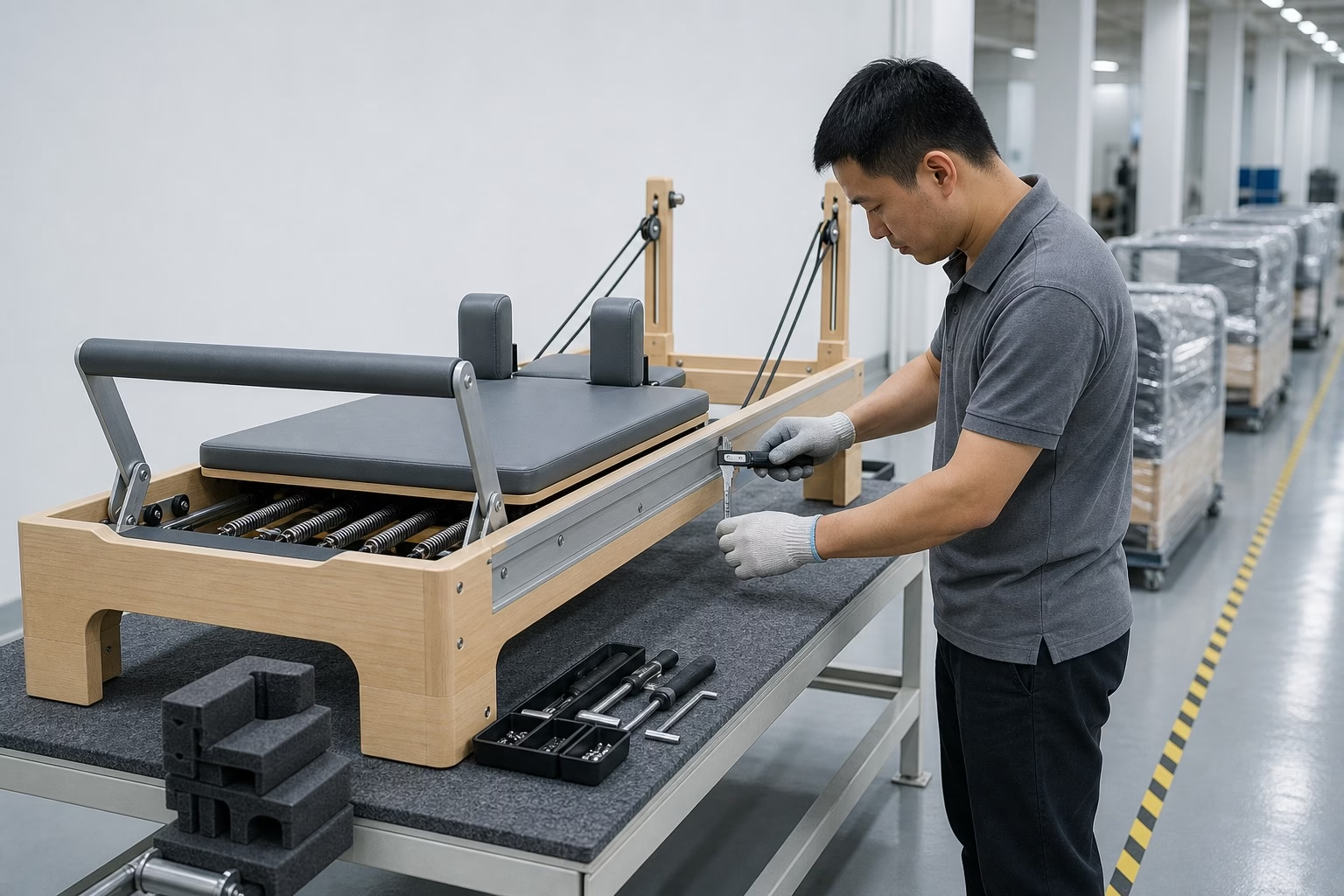
Two different jobs get blurred together. Commercial negotiation is about price, MOQ and payment terms. A factory audit is about whether the business in front of you can actually build what it is quoting.
You can do most of it from your desk. A video call, a handful of document requests, and a third-party inspection on the first order. You do not need to fly anywhere to learn whether a supplier is real. You need to know what to ask for.
Every legitimate Chinese manufacturer holds a business licence. Ask for a scan and check three things.
If the name on the invoice belongs to a different company from the factory, you are most likely talking to a trading company. That is not automatically bad. Trading companies can be excellent operators. But you should know which one you are dealing with, because the price structure, the lead time and the after-sales route all change.
So ask directly. Are you the factory, or the trading partner? A supplier who hesitates on that question is telling you something.
ISO 9001 is a quality management system certificate. It says the factory has written procedures for checking its own work, and that an auditor confirmed those procedures exist.
It does not say the springs are good. It does not say the welds are clean. It does not say your order will be inspected before it ships.
Treat it as one line of evidence, not the whole file. Ask two follow-ups. Which certification body issued it, and what is the certificate number and expiry date? Then check that number against the issuing body’s register. A logo on a brochure costs nothing. A verifiable certificate number does not.
Buyers ask what the monthly capacity is, and usually get a round number. On its own, that number is close to useless.
The useful version is different. Ask how many lines run your product type, and how many machines each line completes per day. Then ask what happens to your order when a larger client places one at the same time.
Two follow-ups separate real answers from sales answers.
A factory that knows its own floor will answer both without pausing. A middleman will generalise.
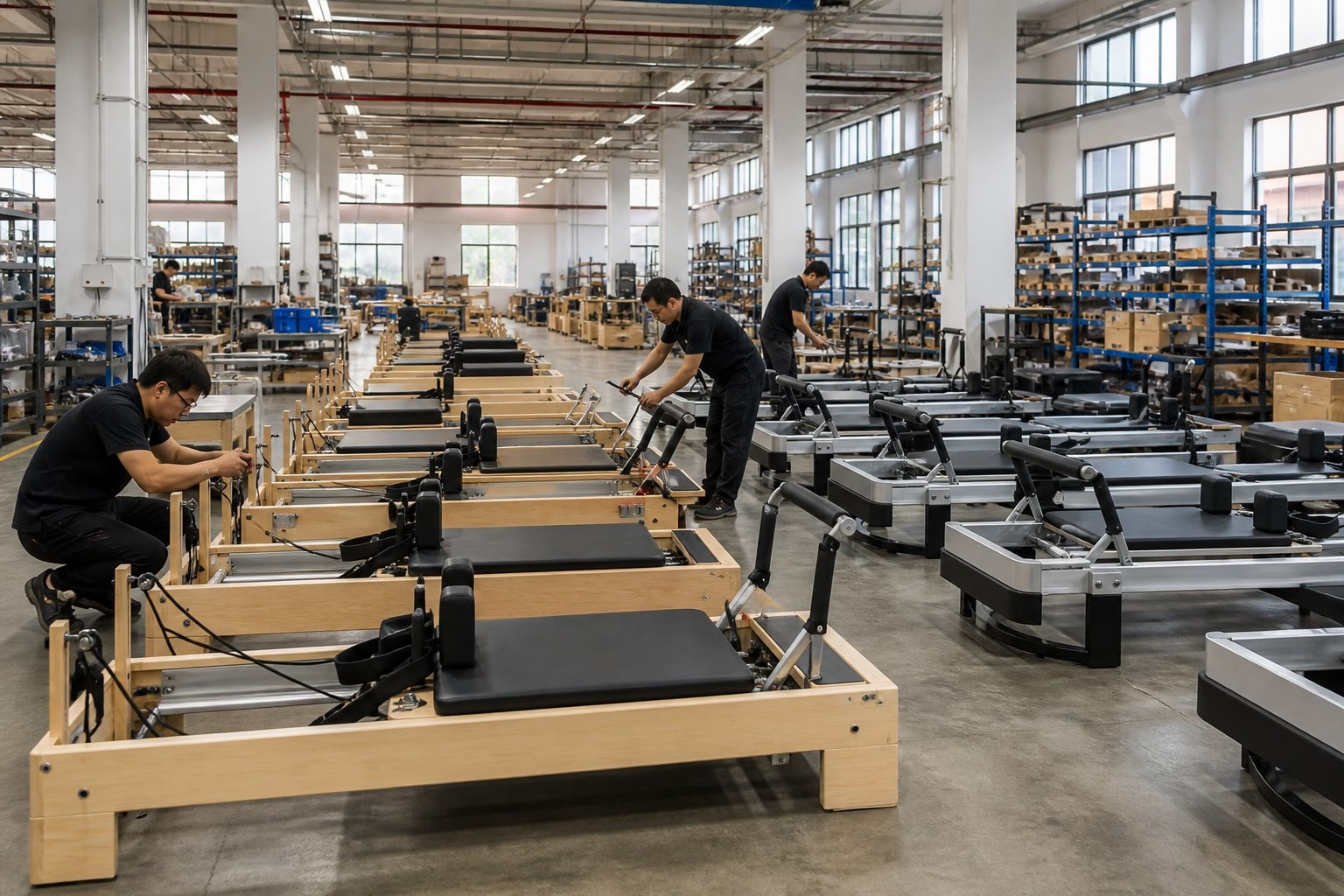
A recorded factory tour is easy to stage and easy to pad out with stock footage. A live video call is much harder to fake, because you decide where the camera goes.
Ask for a live walkthrough and request these five shots, in this order.
If a supplier cannot manage a live call during working hours in their own timezone, treat that as a data point. Not proof of anything, mind you. Just a data point.
These get sold as one service. They are not the same thing.
During-production inspection happens while your order is still on the line. It catches a problem early enough to fix it. It is the most useful and the least requested.
Pre-shipment inspection happens when the order is finished and packed. An inspector opens cartons and checks quantity, finish, hardware, assembly fit and packing. This is the standard choice for a first order.
Container loading supervision watches the goods go into the container and records the seal number. It closes off the we-loaded-it-the-damage-happened-later argument before it starts.
On a first order, book a pre-shipment inspection and add loading supervision if the volume justifies it. Ask for the report in writing, with photographs, before you release the balance payment.
Most inspection reports use an AQL sampling table. AQL stands for acceptable quality limit. The inspector does not open every machine. They check a sample size set by the order quantity, then count defects against a limit you agreed beforehand.
You choose that limit before the inspection, not after it. Writing it into the purchase order is what makes the report enforceable. If the report comes back over the limit, you have a documented reason to reject or rework.
So ask your supplier to accept an inspection clause in the order. A factory with nothing to hide will agree.
This is where buyers get caught out, and it varies by destination. Ask which documents your market requires, and ask who pays for them.
Do not accept a claim without the paper behind it. And do not accept a certificate that names a different product or a different model number.
A reformer carries a person in motion. The frame and the carriage rails take a dynamic load, not just a static one.
Ask two questions. What load does the frame carry in testing, and can they supply the test record? A structural test at a defined load, recorded with a date and a batch reference, tells you more than any marketing figure.
If your order is going into a commercial studio, a gym or a hotel facility, someone downstream will eventually ask for this document. Get it on the first order, not the third.
A short list. Any single item is a question worth asking. Two or more should stop the order.
Before you pay a deposit, you should be able to answer yes to all of these.
An audit tells you whether a factory is real. It does not tell you which machine suits your room. Those are two separate decisions, and you should make both.
Our reformer range covers wood and aluminium carriages, and the reformers with tower page lists tower configurations separately. Two common starting points: the maple wood reformer for studios that want the classical look, and the WT aluminium alloy reformer with tower for high-traffic rooms that need a lighter machine.
If your market leans toward Lagree-style training, look at the megaformer range separately. The buy-in, the service model and the class economics are not the same as a classical reformer.
Send us your destination market, your expected volume and the model you are evaluating. We will walk you through how a first order is handled end to end, and what the production schedule looks like on your quantity.
Auditing a factory before you place the order?
Send your market, volume and target model. We will come back with a straight answer on documentation, inspection and lead time.

