info@wolsports.com
0086 132 8323 3443
Factory price pilates equipments

info@wolsports.com
0086 132 8323 3443
Factory price pilates equipments
A physiotherapist in Leeds sent me a photo of her treatment room back in March. Two plinths, a wall bar, and one empty corner where she wanted a reformer. Her question was short: will a studio reformer work for rehab clients, or does she need a “clinical” machine?
I have been building pilates equipment for clinics since 2013, and I get a version of that question most weeks. The honest answer is that no factory builds two fundamentally different reformers. The frame, the rails and the carriage are the same parts. What changes is the configuration, and configuration is decided before the machine is built, not after it lands.
So here is the checklist we walk through with physio clinics, senior fitness programs and adaptive studios. Four decisions. Get them wrong and you own a machine your patients cannot get onto.
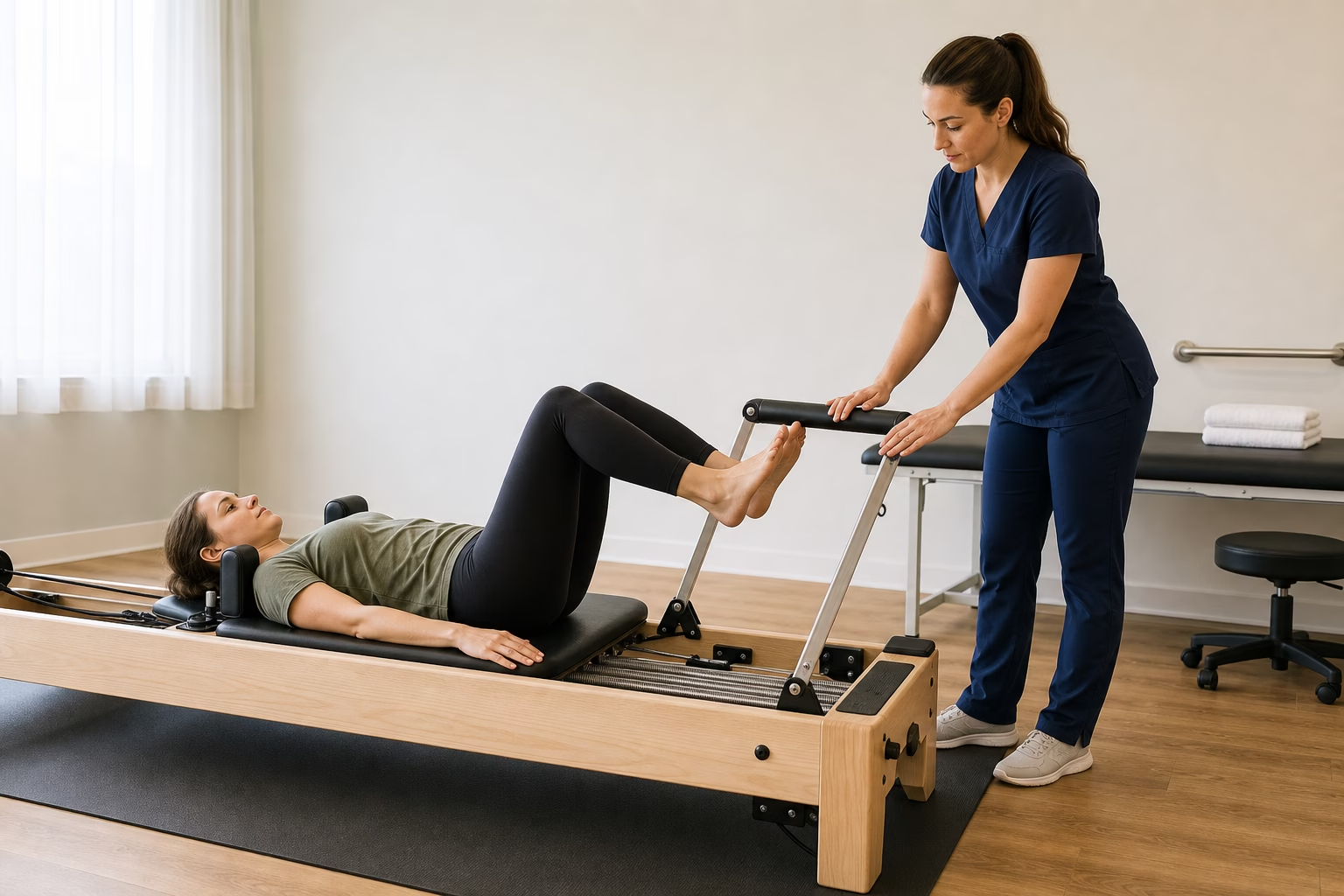
Walk into most studios and you will see reformers set up for a healthy, mobile adult who can step on and lie down without help. That is the default build. It is also the worst build for a rehab room.
Three variables decide whether a machine works clinically:
Everything else, from upholstery colour to the spring brand, is a detail you can live with. These three you cannot.
Most reformers sit somewhere between 24 cm and 28 cm at the top of the carriage. That is fine for a 30-year-old who hops on. It is not fine for a client six weeks after hip replacement, a 74-year-old with balance problems, or a therapist lifting legs forty times a day.
Low machines force two bad habits. Clients sit down on the frame and swing their legs across, which is exactly the movement you are trying to protect. Therapists bend and lift, which is how clinic staff end up with their own back injuries.
Ask your supplier two questions before you order:
On a wooden reformer the leg length is cut and drilled at the factory. You cannot fix a low frame later with blocks under the feet — the machine will rock and the carriage will not track straight. This decision belongs on the order form, not on delivery day.
The second decision is what the client lies on. A narrow carriage with thin padding is fine for a fit client doing footwork. It is uncomfortable for a larger body, and it gives a post-surgical client nothing to feel secure against.
Two practical checks:
Width also changes the room. A wider carriage is not much wider at the base, but the standing space beside it shrinks. Work the layout out on paper before you choose — our reformer size guide has the working dimensions.
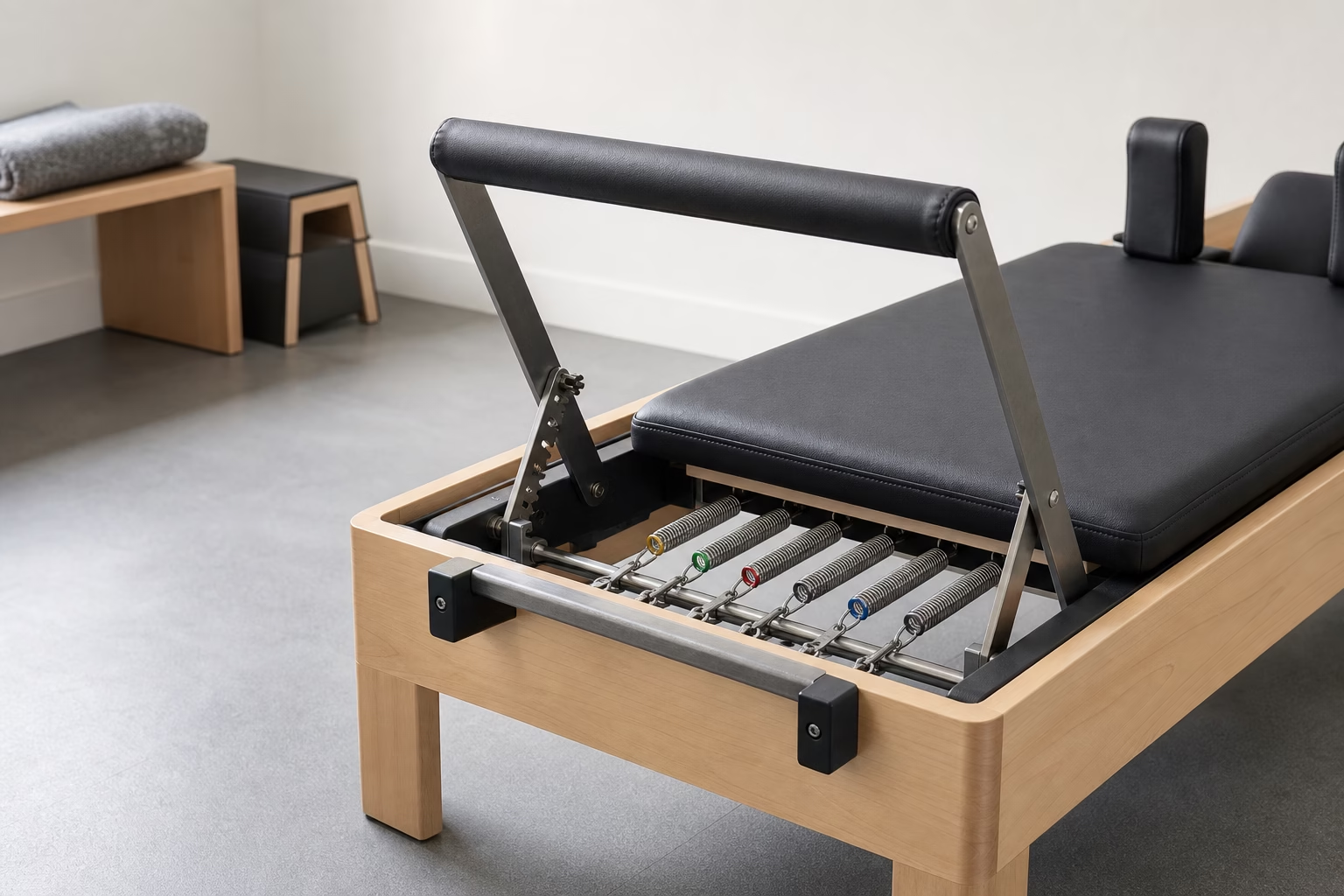
Sales pages love to quote maximum resistance. Clinics should care about the other end of the range. A post-operative shoulder or a client with low bone density needs one light spring, sometimes a half spring, and a progression that adds resistance in small steps.
Ask for the spring chart on the exact model you are buying: how many springs, what tension each one carries, and what the lightest single-spring setting produces. A supplier who cannot send that in writing has not built equipment for clinics. Our spring guide explains how the counts work.
Clinics rarely serve one population. Here is how we map the four decisions to the groups we see most often.
| Client group | What actually changes | What to specify at order |
|---|---|---|
| Post-surgical and physical therapy | Entry and exit safety, lowest usable resistance | Raised frame, full spring chart, stable footbar |
| Senior programs | Balance, getting on and off the carriage | Raised frame, handhold or tower, wider pad |
| Larger bodies | Support and load rating | Wider carriage, thicker pad, rated capacity in writing |
| Prenatal and postnatal | Position changes, lighter resistance | Light springs, adjustable headrest, quick footbar changes |
| Tall clients | Carriage length and shoulder rest position | Longer carriage option, confirm carriage length first |
Once a clinic moves past single-client rehab into group sessions, a reformer on its own runs out of exercises. A tower adds springs above the carriage for the standing and suspended work clinics use constantly. A Cadillac or trapeze table adds the wider repertoire for stretching, traction and low-load stability work.
Two routes we see most:
For a mixed clinic our advice is usually simple: reformers with tower in the treatment room, standard reformers in the group room.
A supplier who answers all six in writing is a supplier you can build a clinic around. Our reformer range is built to order for exactly this reason — frame height, carriage and spring set are chosen before production, and we will tell you which build suits the client group you describe.
Can I use a standard studio reformer in a clinic?
Yes, if the frame height and spring range fit your clients. The usual failure is not the machine. It is ordering the default studio build and discovering the bed sits too low for half the caseload.
Is a reformer or a Cadillac better for physical therapy?
They do different jobs. The reformer carries most rehab work because clients sit, lie and kneel on a moving carriage. The Cadillac suits low-load stretching and clients who cannot manage the carriage yet. Many clinics run both.
How much clear floor does a clinic reformer need?
Plan the machine footprint plus standing and transfer space on both sides. For clinic work we usually plan the same envelope as a small studio — roughly nine to ten square metres of clear floor per machine — because a therapist has to walk around the carriage.
Tell us the client group and the room you have. We will recommend the frame height, carriage and spring set, then send a quote with lead time and packing details.

